Ambient Light
Flameless Candles and Warm Mini Lights
If you buy through links on this page we may earn a commission at no extra cost to you.

The honest version first: no flameless candle passes the two-foot test. Hold one up close and the flicker pattern betrays it every time. Two feet back, in a dark room, with the glow washing across a wall — that is where they stop being an imitation and start being a light source in their own right. And that is exactly how a bedroom uses them: from across the room, at the lowest possible brightness, for the last hour of the day.
Where flameless candles earn their keep
A real candle on the nightstand is a lovely idea with three practical problems: an open flame near curtains and bedding, soot on the ceiling over months, and the fact that you cannot fall asleep before it burns out. Flameless pillars solve all three, which is why they have quietly become the default in hotel rooms and in homes with small children or cats.
What they deliver is a very specific kind of light. A good pillar runs at 1800K to 2200K and puts out somewhere between 3 and 15 lumens — a fraction of even the dimmest table lamp. That low output is the point. It is enough to keep the room from feeling black, not enough to signal your brain that the day is still going. For the wind-down hour, this sits one rung below a dimmed lamp and one rung above a night light.
They also earn their spot in places a lamp cannot go: a windowsill, a shelf alcove, the floor corner beside a reading chair. Anywhere you want a pool of warm light rather than a lit room.
What separates a good flameless candle from a toy
The gap between a convincing pillar and a gas-station novelty comes down to four details, and only one of them is the flicker.
Flicker quality. Cheap models blink on a fixed loop, which the eye picks up in seconds. Better ones use randomized timing, often driven by a small weighted magnet moving over a coil — the same trick that makes the light dance instead of pulse. Look for the phrase “moving flame” or “randomized flicker” and be suspicious of listings that only say “realistic.”
The body. A real wax shell with a melted, domed top reads as a candle from across the room. Hollow plastic does not, especially when the LED shows through the sides as a faint ring. Wax-coated models cost a few dollars more and are worth every one.
The timer. A 5-on/19-off or 6-on/18-off timer is the feature that makes these practical. Set it once at bedtime and it runs on schedule for months. Models without a timer become a nightly chore of clicking tiny switches, and nobody keeps up that habit past week two.
The battery. AA or C cells run for months on a timer; CR2032 coin cells die in weeks and cost more to replace than the pillar did. Honestly, at this price you are choosing which compromise to live with — just make sure the compromise is the battery, not the light itself.
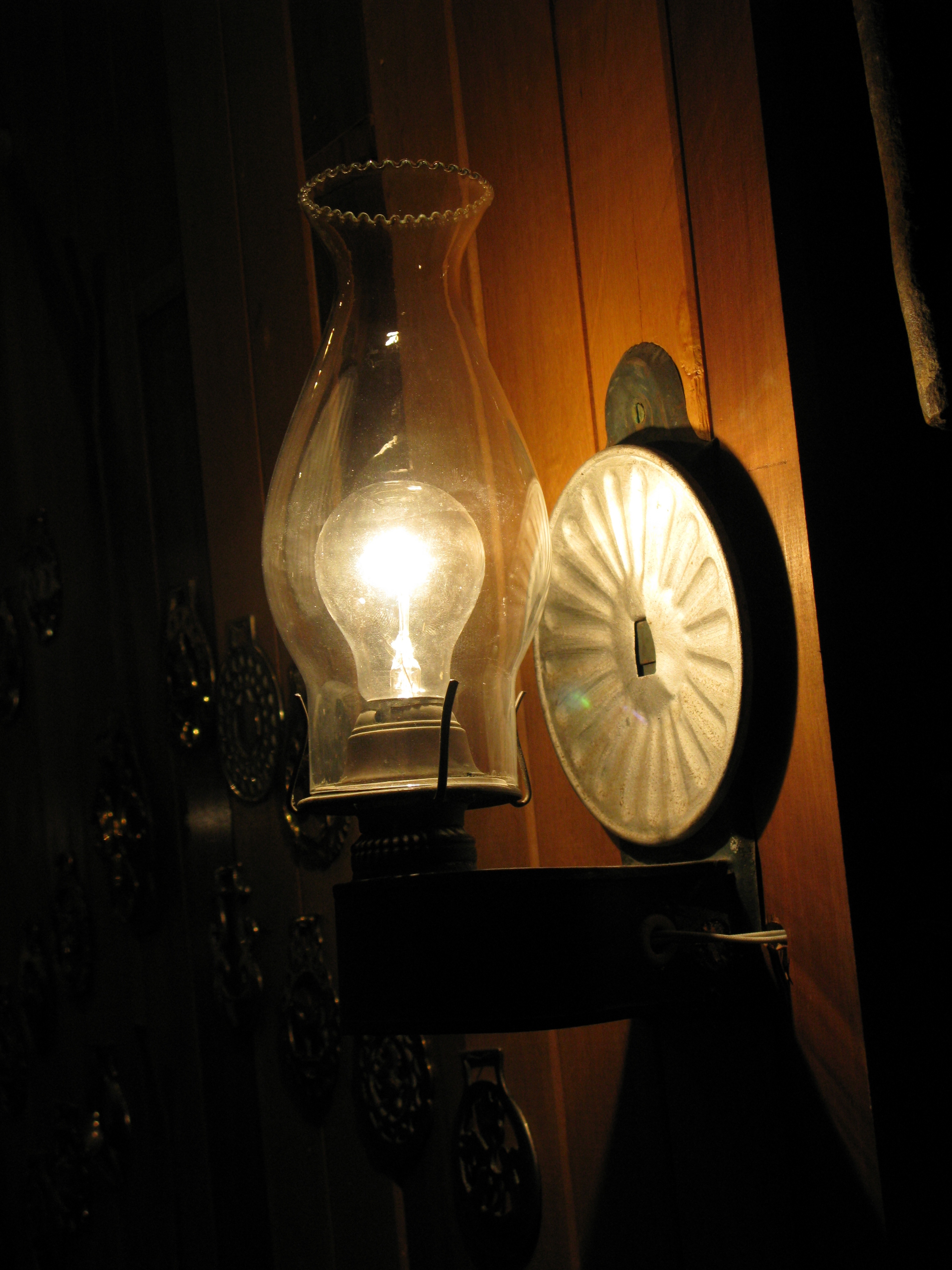
Warm mini lights: the flexible sibling
Where a pillar is a fixed object, warm mini lights are a material you can shape. These are the thin copper-wire strands — 20 to 100 LEDs spaced a couple of inches apart, running on 2200K to 2700K — that put out 20 to 80 lumens for an entire strand. Coiled loosely inside a glass jar or cloche, they become an accent lamp. Run along a headboard shelf or behind the bed, they become a soft wash that reads as candlelight from across the room, which is why they pair so well with the ideas in lighting behind the bed.
Because the wire is nearly invisible, the light appears to float. That is the whole aesthetic, and it is also the trap: visible battery boxes and sagging runs undo the effect. Plan where the box hides before you uncoil anything.
One caution on the popular “candlelight” strands marketed for bedrooms: the same brightness rules that govern LED strips apply here, just at smaller scale. For a comparison at the other end of the intensity spectrum, see our LED strip buying notes.
A five-point checklist before you buy
Run any pillar or strand through this list and the duds eliminate themselves:
- Color temperature 1800K–2200K. If the listing does not state a Kelvin number, assume it is too cool. This is the single spec that decides whether the light reads as candlelight or as cheap electronics — our light temperature guide covers why in detail.
- A timer function. Non-negotiable for anything you plan to run nightly.
- AA or C batteries. Skip coin cells for anything used more than occasionally.
- Wax body or flame-shaped LED tip on pillars; clear or enameled glass jar for strands.
- A placement with a backdrop. Warm light doubles in impact when it lands on a wall, a shelf or glass instead of disappearing into the middle of a dark room.
If your main goal is navigating the room after lights-out rather than atmosphere, what you actually want is a dedicated amber night light — a different tool with a different job.
Frequently asked
- Are flameless candles safe to leave on all night?
- Yes, in the ordinary sense — the LED stays cool and there is no flame, so a wax pillar on the nightstand is not a fire risk the way a real candle is. Use the timer function anyway so it shuts off after a few hours and the batteries do not die mid-week.
- What color temperature is closest to real candlelight?
- Real candle flame measures roughly 1850K, so look for strands and pillars labeled 1800K to 2200K. Anything at 2700K or above starts reading as electric rather than candlelight, especially against a dark wall.
- Do the batteries really last as long as the box claims?
- Treat the claim as a best case. Those numbers usually assume short daily use without a timer, and coin-cell pillars burn through charge far faster than AA models. Expect weeks, not months, from a nightly-use pillar.