Ambient Light
The Four Layers of Bedroom Light
If you buy through links on this page we may earn a commission at no extra cost to you.
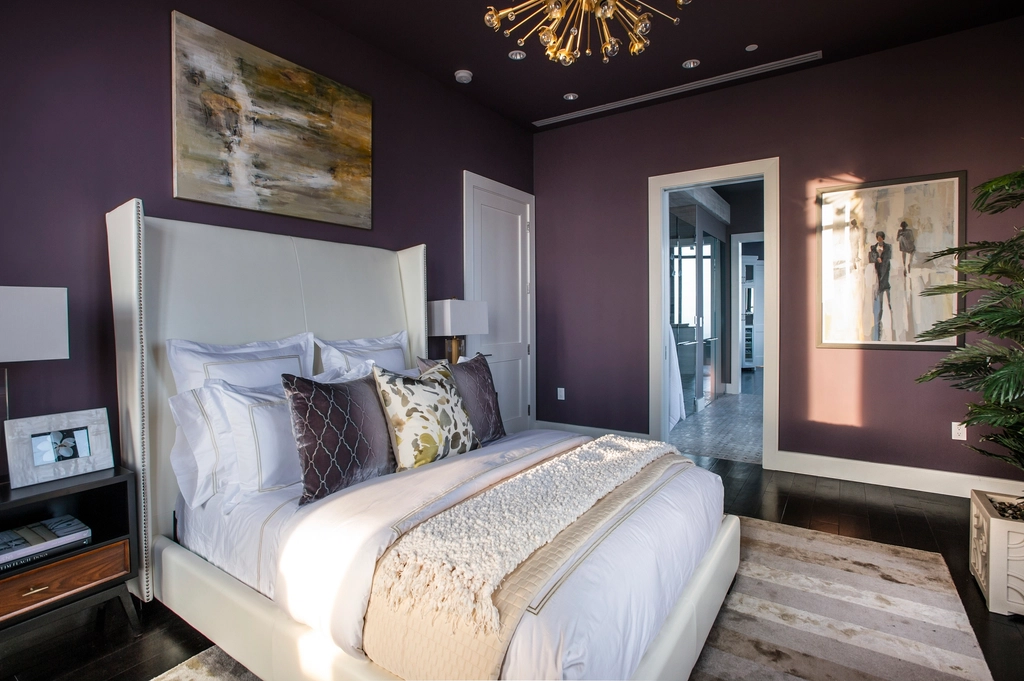
Look at most bedrooms after dark and you will find exactly one lighting decision: a fixture in the middle of the ceiling, plus maybe a pair of bedside lamps. Three sources, each with an on-and-off. A room that works at every hour — dressing, reading, winding down, finding the bathroom at 3 a.m. — is built from four separate layers instead, each with its own job, its own brightness range and its own switch. The layers are ambient, task, accent and night. Once you can name them, you can diagnose any bedroom in about a minute. This piece is the map of those four layers: what each one contributes, what hardware covers it, and the small control decisions that make them behave like one designed system instead of four unrelated gadgets.
The working layers: ambient and task
Ambient light is the baseline — the general illumination that lets you walk in, make the bed and find everything on the floor. A flush mount, a pendant or a handful of recessed spots all do this job, and in a typical 12-by-12 bedroom you need surprisingly little of it: somewhere in the range of 1,000 to 2,000 lumens total, spread across the ceiling rather than concentrated. The upgrade that matters is not more light but control — a dimmer on that fixture turns one source into a dozen moods, and it is the single highest-value change in the whole room. Placement runs a close second: a single central fixture leaves the corners dark, so in square rooms with deep corners, a pair of wall lights or a second small source earns its spot. For the hardware side of that choice, see our notes on dimmable ceiling lights.
Task light is pointed, not general — light aimed at where a job happens. In the bedroom the jobs are reading, sewing on a button, checking a tag, doing a crossword at midnight. The reader’s lamp wants 400 to 500 lumens directed at the page, not at the wall, and the numbers behind that figure are broken down in our bedside lamp lumen guide. A shade that closes at the top concentrates the pool downward; an open-top design spills half its output onto the ceiling where nobody has ever read a book. Two bedsides mean two task lights: the non-reading partner gets a much dimmer unit or none at all, an asymmetry worth embracing rather than matching away. Where partners’ schedules clash, reading late without waking anyone covers the aiming and shielding tricks.
The test for both layers is simple. Ambient answers “can I clean this room?” Task light answers “can I read without squinting?” If either answer is no, that layer is missing, not underpowered.
The quiet layers: accent and night
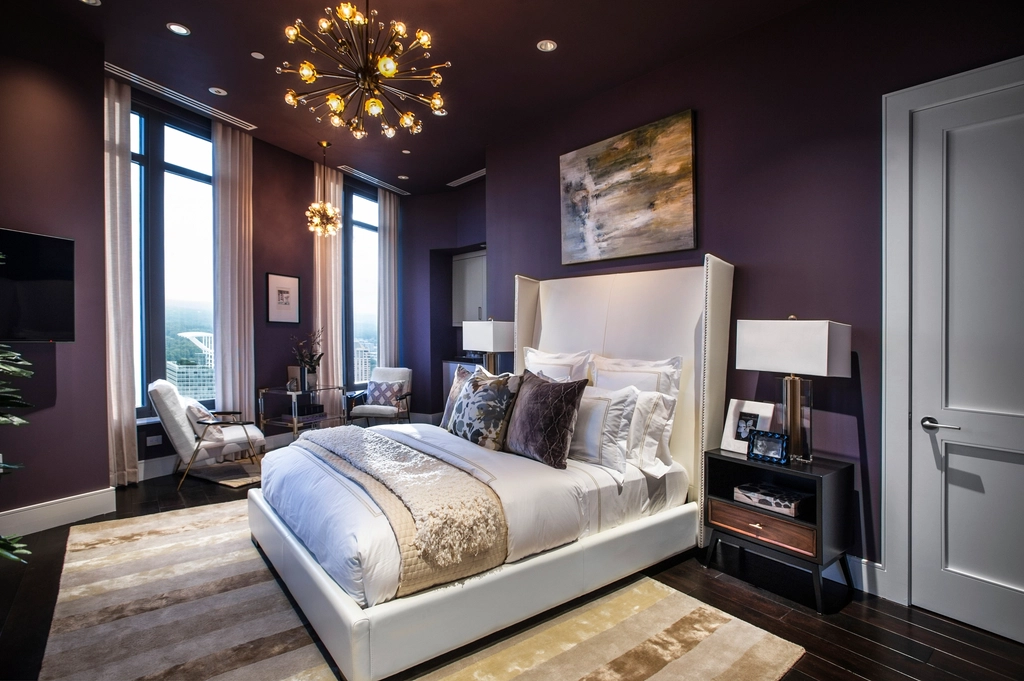
Accent light is the layer everyone skips, and honestly, nobody misses it on a functional level — the room works without it. What it buys is depth. A soft wash behind the headboard, a strand coiled in a jar, a small uplight on a plant: these turn a lit room into a staged one, and they are what every hotel room leans on after sunset. Accent runs dim — 20 to 100 lumens, always below your task sources — and its hardware is usually the cheapest in the room. Because it never has to illuminate anything, you can install an accent layer in an evening with tape, clips and a very small amount of planning. The wash-behind-the-bed treatment is laid out in headboard glow ideas, and the jar-and-strand version in our fairy lights guide.
Night light is the layer your sleep actually cares about. Its job: light the path to the bathroom at 3 a.m. without telling your body clock that morning has arrived. The spec is amber color at 1 to 5 lumens, placed low and out of your lying-down sightline. This is the smallest, cheapest layer in the room and the one with a direct line to sleep quality, because every mid-night flip of a main switch is a luminance hit your melatonin pays for. The color science and format options get their own treatment in amber night lights and sleep.
Making the four layers work together
The layers only pay off when they can run separately — a room where everything toggles on one wall switch still behaves like a one-light bedroom, whatever hardware hangs in it. So the last step is control. Wall dimmers on the ambient circuit, inline dimmers on lamp cords, motion-sensing on the night layer: each layer gets an independent knob, and no layer should depend on another being on. In practice that means the lamps get cord dimmers, the ceiling gets the wall control, and the night layer runs on its own sensor with no button at all.
This is also where the plan stops being theory. If you want the whole thing mapped into a single buying session — which fixture, which lamp, which night light, in what order of importance — the one-afternoon planning guide turns the four layers into a concrete shopping list with budget splits. Build the layers in that order and the room stops having an “off” state; it has four graded steps from full daylight to a 3 a.m. walk to the kitchen, and every hour in between gets the light it actually needs.
Frequently asked
- Can a small bedroom get away with fewer layers?
- Yes, if the layers it keeps are chosen well. A single dimmable bedside lamp can cover both ambient and task duty in a small room, and a dimmable ceiling fixture handles the rest. The night layer is the one that never gets cut, whatever the room's size.
- Which layer should I set up first?
- Task light, almost always. The bedside lamp earns its keep every night, while accent lighting is decoration and can wait. Night light comes second because it is cheap and immediate, then ambient control, then accent last.
- Does every layer need its own switch?
- Ideally yes, because the whole point of layers is running them separately. Wall dimmers, inline cord dimmers or smart scenes all achieve it — what matters is that no layer can only be toggled together with another one.