Ambient Light
Lighting Behind the Bed: Headboard Glow Ideas
If you buy through links on this page we may earn a commission at no extra cost to you.
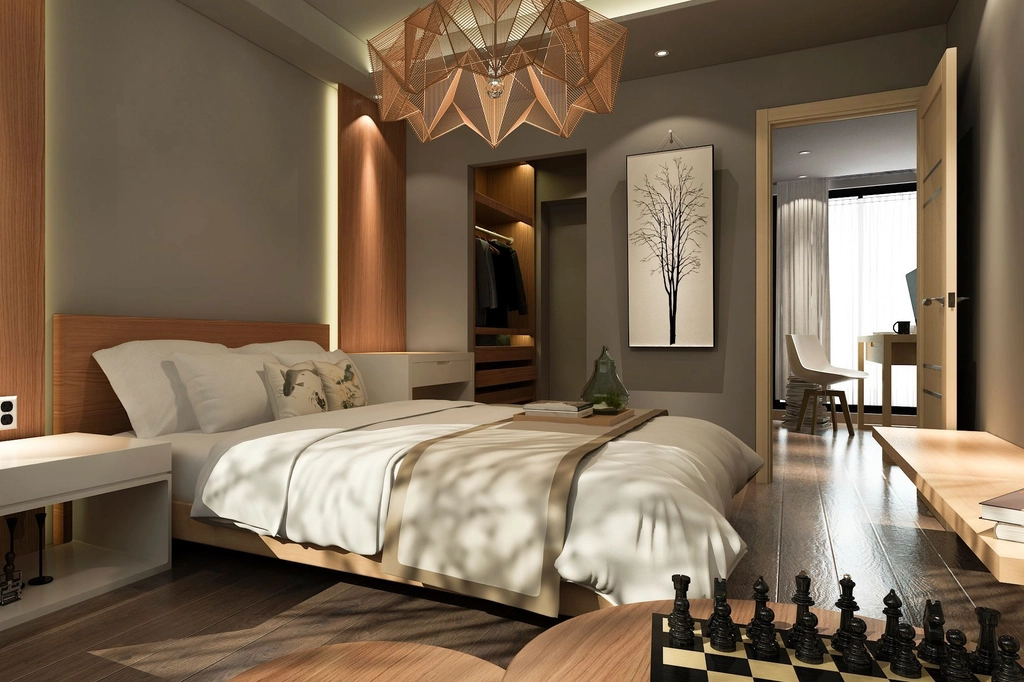
The most flattering light in a good hotel room never touches your eyes directly. It washes down the wall behind the headboard, bounces across the ceiling and the bedding, and softens everything it lands on. That is backlighting, and it works just as well at home: the wall becomes the lamp, glare disappears, and the room reads gentler at night than any bare bulb could manage.
Why bounced light beats a bare bulb
Direct light carries a problem that no shade fully solves: it comes at you. Even a soft table lamp puts its brightest point at eye level for someone sitting up in bed, and every surface between you and the lamp shows hard shadows. Light aimed at a wall flips the arrangement. The wall diffuses the source, spreads it wide, and returns it as an even wash — shadows stretch, glare vanishes, and the brightness your retina perceives stays low even though the room is genuinely lit.
This is also why backlighting suits bedrooms specifically. At night your eyes are their most sensitive, so the difference between a source you can stare into and one you cannot is the difference between pleasant and punishing. Bounce the light and the question never arises.
The wall itself is part of the design. Light-colored matte walls reflect most of what hits them and spread it evenly; dark or glossy walls absorb light or mirror the source, which means a strip behind a charcoal headboard wall needs double the output for the same effect. If your wall is a deep color, either raise the brightness and accept a moodier wash, or pick the sconce route, where the fixtures sit closer to the bedding and matter less what the wall does.
Four ways to do it
LED strip on top of the headboard, aimed at the wall, is the cheapest and most forgiving. A 2700K strip at 10 to 30 percent brightness covers it, and mounting takes an afternoon. The strip hides completely behind most headboards, so the effect reads as a glowing wall with no visible hardware. Position it a few inches below the headboard’s top edge — too high and the LEDs peek out from across the room, too low and the headboard blocks its own light.
A pair of sconces flanking the bed, above or on the headboard, gives the same wash with more structure — and wall-mounting frees the nightstand entirely. Plug-in sconces avoid electrician costs; hardwired ones keep the cord invisible. Aim for fixtures with downward or all-around shades rather than reading-focused optics, which concentrate light in a pool instead of washing the wall.
A floating shelf with a strip underneath, mounted just above headboard height, builds a proper cove: the light escapes upward and downward, doubling the effect. This is the closest you can get to hotel cove lighting without renovation, and our cove lighting guide covers the construction details.
A floor lamp behind the bed corner is the no-install option. Point the shade at the wall, keep the bulb warm and dim, and you get a partial wash that costs nothing and moves when you do.
Color temperature and brightness for a headboard glow
The wall is now your diffuser, so the numbers matter more than with a shaded lamp. Stay between 2200K and 2700K — anything cooler turns the wash clinical, and this is one placement where very warm light genuinely flatters, since bounce softens it further. For total output, aim for 100 to 250 lumens across the whole run at full power, then dim to taste; the wall spread makes even 100 lumens feel generous. If the strip or sconce is dimmable, set your evening scene around 20 to 40 percent and let the glow do the rest.
Uniformity is the second half of the quality. A strip with visible LED dots — the “disco dot” effect — ruins the wash at close range, and it shows most on walls the strip sits near. A strip spaced two to three inches off the wall throws its dots apart before they hit the paint; closer than that, use a diffusing channel or a strip with high density. Stand where you actually lie at night and check: if you can pick out individual light points from the pillow, add distance or diffusion. This placement is one layer of the room’s overall plan, and it pairs naturally with the four-layer approach to bedroom light.
Renters: the no-drill versions
Every method above has a hole-free variant. LED strips mount with clips and removable adhesive pads on smooth walls. Plug-in sconces hang from heavy-duty adhesive hooks with the cord running down behind the headboard — ugly only if you skip the cord channel. A slim shelf can sit on existing picture ledges or lean against the wall, with the strip taped to its underside. Put the whole lot on a smart plug and the glow answers to one switch.
Test before you commit anything permanent. Painter’s tape holds a strip at the trial position for a night, and a cheap warm bulb in an existing floor lamp behind the bed previews the wash for free — try the glow out from the pillow before buying hardware. Once the position is proven, browse the rest of our ambient lighting ideas and think about how the headboard glow plays against the rest of the room’s layers.
Frequently asked
- Is an LED strip behind a fabric headboard safe?
- Yes, with two conditions: LED strips run cool compared to bulbs, and you should not encase the strip or trap it against thick padding. Leave an air gap, mount it to the frame or wall rather than the fabric, and avoid any strip that feels hot to the touch after an hour.
- How high should sconces sit behind the bed?
- Around 40 to 48 inches from the floor, roughly shoulder height of someone sitting up in bed. Higher than that and the light leaks over the headboard into the room; lower and it grazes your eyes when you sit up.
- Will a headboard glow disturb a sleeping partner?
- Far less than any table lamp, because the light never points at the bed. Keep total output under about 250 lumens, dim it below 30 percent for late nights, and shield the source so the glow washes the wall instead of spilling across pillows.