Ambient Light
Amber Night Lights and Sleep
If you buy through links on this page we may earn a commission at no extra cost to you.
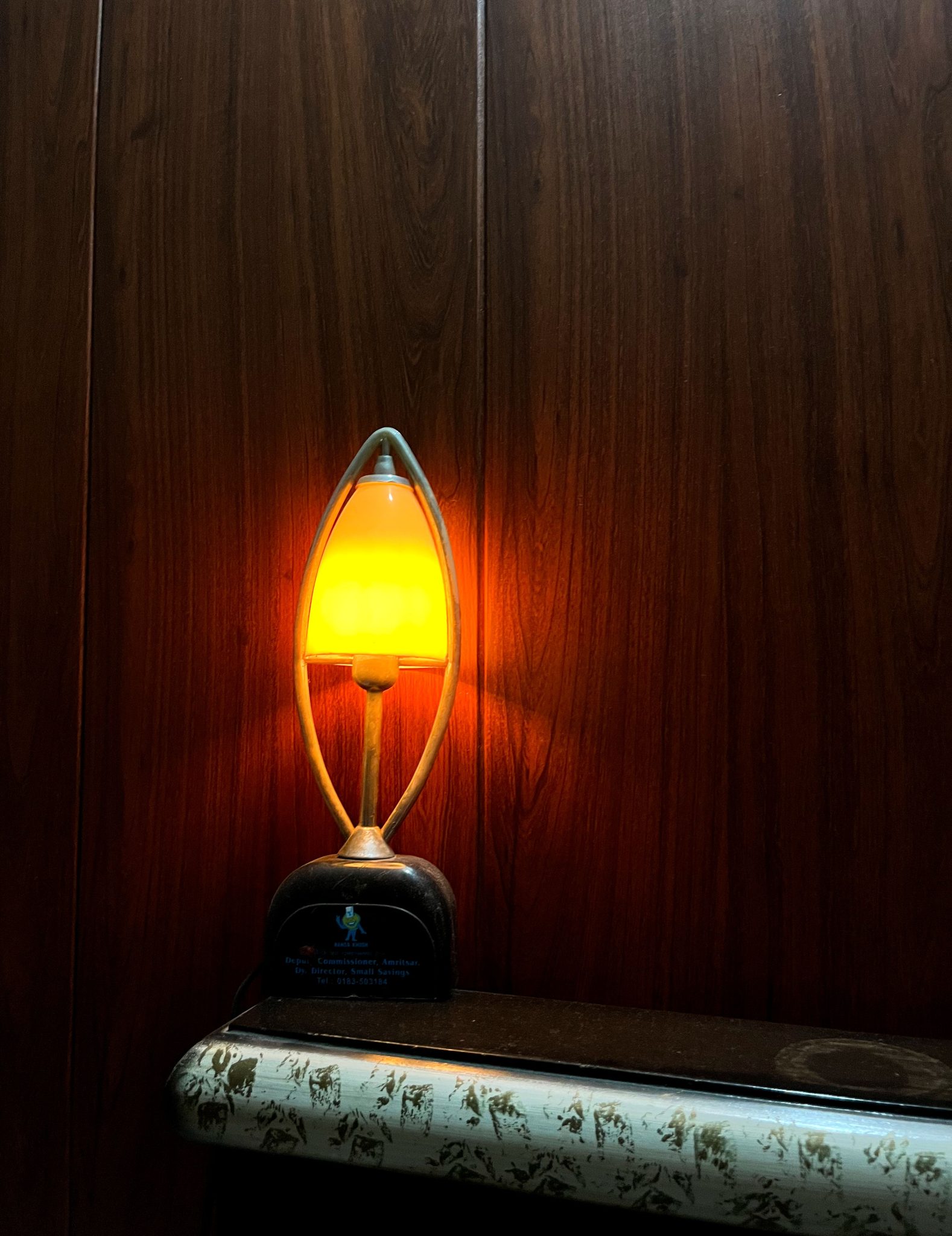
Somewhere between total darkness and a hallway floodlight sits a small orange compromise: the amber night light. Its entire job is letting you see the floor at 3 a.m. without telling your body it is morning. Get the brightness and placement right and it quietly earns its spot every single night. Get them wrong and it becomes just another glowing gadget on the outlet — or worse, a melatonin problem dressed up as a safety feature.
What amber actually changes after sunset
The biology, stated plainly: light at night suppresses melatonin in a dose-dependent way, and the suppression is driven mostly by short-wavelength blue-cyan light around 480 nanometers — the band your eyes report to the body clock. Amber and deep-orange sources sit at the far end of the spectrum from that band, so at equal brightness they press on the sleep system far less hard.
So let me be blunt about what a night light is and is not. It is not a sleep aid. Nothing you plug into a wall makes you sleep better. It is a fall-prevention tool that happens to be kind to your melatonin — and that framing matters, because the alternative, flipping on a bathroom light mid-night, delivers a luminance hit that can push your body clock around far more than any amber glow ever will.
The honest scale of the effect: an amber unit at 1 to 5 lumens, placed low and out of your line of sight, has a negligible impact on sleep compared with even a few seconds of ordinary 2700K room light. The color choice matters most when the light stays on all night, every night — which is exactly how hallway and bathroom night lights are used.
Plug-in, motion-sensing or portable: picking the format
Three formats cover the whole market, and the right one depends on when the light is needed rather than how much.
Constant plug-in units with a dusk-to-dawn sensor run from sunset to morning and suit rooms you cross at unpredictable hours — hallways, stair tops, the bathroom threshold. They cost $8 to $15, and the light sensor is the feature worth paying for over a plain always-on plug.
Motion-sensing units stay dark until you move, then fade up. This is the best default for bedrooms with an irregularly sleeping partner, because the light never glows during sleep at all — it only appears when someone is already up and moving. The fade-in also spares you the shock of sudden brightness at 4 a.m.
Portable rechargeable pucks cover the cases the other two cannot: a bedside unit that lifts off its base, a light for travel, a glow under a crib or a bedframe. They run $15 to $30, and the useful spec is battery life measured in weeks at low output.
Whichever format you choose, one spec matters above all the rest: true dim output. Many budget units have no low setting at all, and a fixed 20-lumen plug is a floodlight in a dark hallway, whatever color it glows.

Placement rules that keep the light out of your eyes
Where the light sits decides more than what it looks like. The goal is to illuminate the path while the source itself stays out of view — you should see what it lights, not the light.
Three rules do most of the work:
- Stay low. Floor level or below. An outlet-height plug already clears the bed, but the lower the source, the less of it reaches your open eyes while you lie in bed or shuffle down the hall half-awake.
- Aim the glow along the path, not across it. A unit inside the bathroom doorway pointing at the floor beats one blazing from the hall. On stairs, light the treads, not the backdrop.
- Keep it out of the pillow’s sightline. Lie in bed and check: if you can see the emitting surface without turning your head, move it or choose an enclosed design that spills downward.
One placement mistake deserves its own callout: a bright unit on the headboard wall behind you. It backlights everything you look at and puts the source square in your peripheral vision all night. If you want a glow near the bed itself, the softer approach in lighting behind the bed keeps the warmth without the hotspot.
Pairing amber with the rest of the evening
A night light works best as the last station on a dimming ladder, not as a lone warm dot in an otherwise blue-lit evening. The lights you run from dinner onward set how much work the night light has to do — if the whole house already drops to warm and dim after sunset, the 3 a.m. transition barely registers. For readers who share a bed, the late-reading setup and a night light stack neatly on the same nightstand without competing.
If you want the whole evening timeline planned out — what temperature and brightness at each hour, from dinner to wake-up — our light temperature guide lays it out hour by hour. And for adults who keep getting up nightly, the fuller options are compared in night lights for grown-ups, including motion formats worth the extra few dollars.
Frequently asked
- Is red light better than amber for sleep?
- Red sits even further from the wavelengths your body clock is sensitive to, so on paper it wins. In practice it distorts the whole room's color and makes stairs and floor edges hard to judge, which defeats the safety job. Amber around 1900K is the practical sweet spot.
- Will a night light disturb a partner who sleeps closer to it?
- It can, if the light shines toward the bed. Keep the unit low to the floor, out of the pillow's line of sight, and prefer enclosed designs that spill down rather than out. Under-bed strips are the politest option for shared rooms.
- How many lumens should an amber night light have?
- For a hallway or bathroom path, 1 to 5 lumens is plenty. A bedside unit meant for reading the clock can go a touch higher. If you can see the light's shape reflected on the ceiling, it is too bright for its job.