Ceiling Lights
Warm-Dim Bulbs for Ceiling Fixtures
If you buy through links on this page we may earn a commission at no extra cost to you.
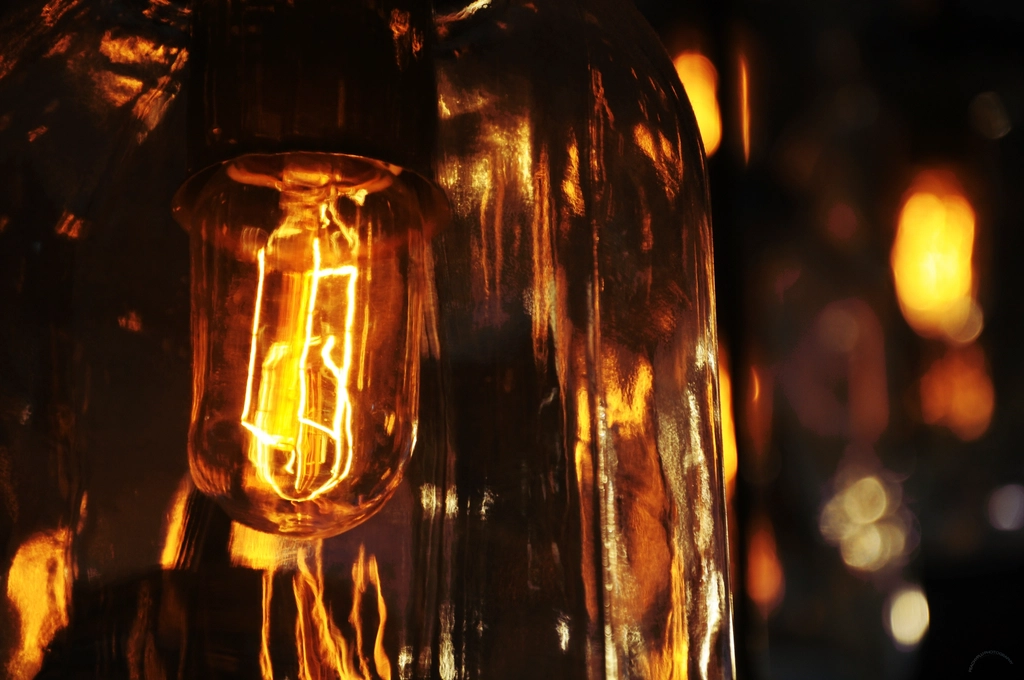
Most LED bulbs lie with a straight face: dim them to ten percent and they stay the same cool white they were at full power. Warm-dim bulbs keep the promise the old incandescents made — as the output drops, the color slides from around 2700K down toward 1900K or lower, ending somewhere near candlelight instead of a dim office. In a bedroom, where the last hour of light is the one that matters most, that shift is the difference between winding down and feeling like you are under examination lighting.
How the trick actually works
A warm-dim bulb carries two sets of chips instead of one: a main channel tuned near 2700-3000K, and a second deep-amber channel near 1800K. The driver inside watches the dim level and cross-fades between them continuously. At full brightness the amber chips barely contribute; near the bottom of the range they do almost all of the work, which is why the light turns the color of a low flame rather than merely dim.
Standard single-channel bulbs move the opposite way in feel: the watts go down but the color stays put, and against a dark-adapted eye the result reads bluer and harsher the lower you go. Warm-dim removes that mismatch. At mid-range — about half output — most models sit near 2300K, which is the zone of late-evening light rather than full-daylight work.
One honest caveat: the amber channel steals some maximum brightness. Budget two to three hundred lumens less than the box claims if you are comparing against a standard bulb of the same size.
A second practical note if the fixture holds more than one bulb: buy the same model for every socket. Two warm-dim bulbs of different brands dim on slightly different curves, and a ceiling that fades unevenly — one side amber, one side still white — looks like a fault rather than a feature. Same brand, same model, bought together, is the safe play.
What to check before you buy
The printed range. Look for two kelvin numbers on the box, not one. A true warm-dim bulb states something like 2700K to 1800K. Marketing phrases like “warm glow” on a single-number bulb mean it just renders warm at full power and stays that color all the way down.
The dimming floor. A bulb that stops at 20% never really goes dark — in a bedroom ceiling that still reads as “on” when you are trying to sleep. Look for a stated minimum of 10% or lower, and treat anything claiming a true 5% as the good stuff.
Dimmer compatibility. Warm-dim bulbs need the right dimmer, usually a trailing-edge or ELV type. The listing should name compatibility; if it does not, assume problems on older leading-edge wall dimmers: flicker at the low end, a buzz, or a range that skips from bright to off.
Peak lumens. Ceiling fixtures want 800-1,100 lumens per bulb for the bright end of the evening. Some warm-dim models trade top-end output for the amber channel, so read the lumen figure, not the wattage.
CRI, lightly. A color rendering index of 90 or better is nice to have at bedside height, where skin and book pages matter, but overhead fixtures forgive 80. Do not pay a premium for high CRI in a ceiling bulb until the four checks above are already green.
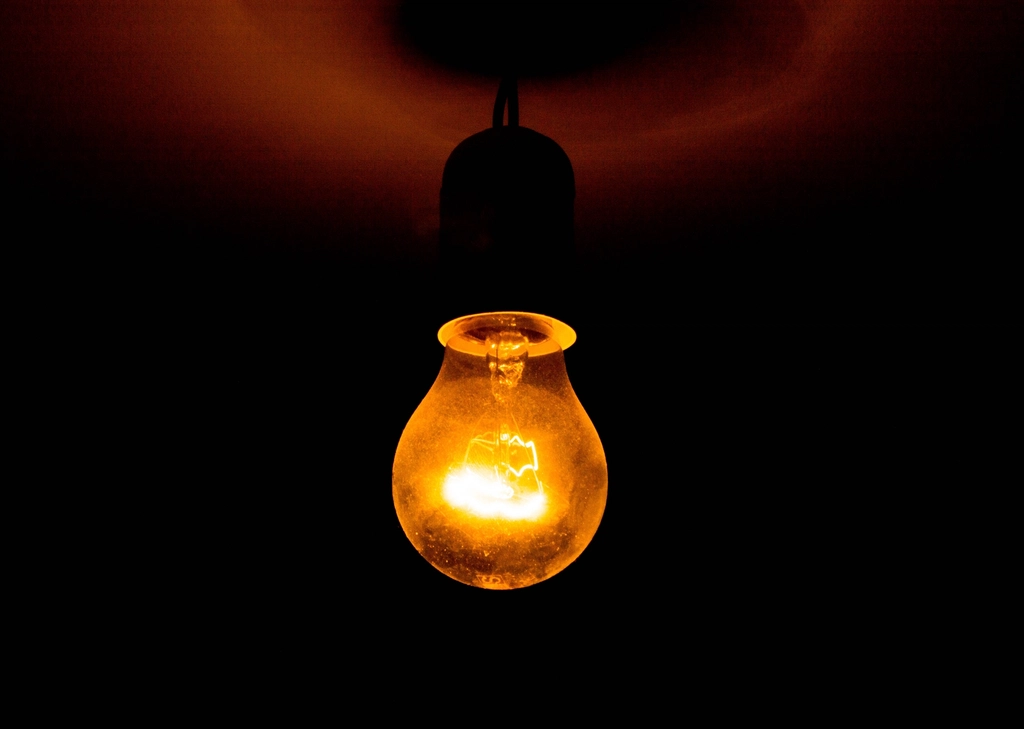
Where warm-dim earns the premium
Bedroom ceilings are the textbook case, followed by nurseries where midnight feeds happen under whatever light is nearest, and dining rooms where a long slow dinner benefits from the candle fade. Anywhere you dim deliberately and often, the effect earns its keep.
Anywhere you do not dim, it does nothing. A warm-dim bulb on a plain on/off switch behaves like an ordinary warm bulb and costs more for the privilege. Closets, staircases, and any fixture controlled by a dumb toggle are wasted applications. Also check what the fixture allows: enclosed globes that trap heat shorten driver life, and some enclosed ceiling designs cannot take a bulb as physically long as the warm-dim units tend to be.
One mismatch worth planning around: the warm-dim ceiling and the fixed-2700K bedside lamp will disagree at night. Dimmed to ten percent, the ceiling glows amber while the lamp on the nightstand sits at full 2700K, and mixed color temperatures in one field of view look sloppy. The fix is cheap — put a dimmable or touch-control lamp bedside so both layers can sink toward the same flame tone together, or accept the ceiling layer as background only during the last hour.
A sensible ceiling setup
The setup that works: warm-dim bulbs in the bedroom fixture, on a compatible trailing-edge dimmer, with the top of the range at full 2700K for dressing and cleaning, the middle around 2300K for ordinary evening, and the floor near 1800K for the last hour before sleep. Three zones, one fixture, zero extra devices.
At $8-15 per bulb versus roughly $3 for a plain LED, you pay about the price of a pizza per fixture for an effect you will feel every single night — one of the few premiums in lighting that I call cheap. If you want the full color-temperature picture, our kelvin explainer covers the whole 2200K-6500K range in plain words, the dimmer switch guide helps you match a wall dimmer, and our comparison of 2700K and 3000K in the bedroom shows why the low end of the scale is where sleep quality lives.
Frequently asked
- Do warm-dim bulbs work with any dimmer switch?
- No, and this is the most common disappointment. Check that the bulb lists compatibility with your dimmer type, usually trailing-edge or ELV. Older leading-edge dimmers cause flicker, buzzing or a shrunken dimming range on many warm-dim models.
- Is warm-dim worth it over a plain 2700K bulb?
- In a bedroom ceiling you dim every night, yes — the difference at low settings is obvious, closer to candlelight than any fixed bulb. In a closet, hallway or any fixture on a plain on/off switch, no: without dimming there is no warm-dim effect at all.
- Why does my dimmed bulb stay the same color as it dims?
- Because it is a standard LED, which drives one fixed-color chip through the whole dimming range. The light actually feels cooler as it dims, relatively speaking, because your eyes adapt to the dark. Only bulbs with a second amber channel shift color on the way down.