Ceiling Lights
How Many Ceiling Lights Does a Bedroom Need?
If you buy through links on this page we may earn a commission at no extra cost to you.
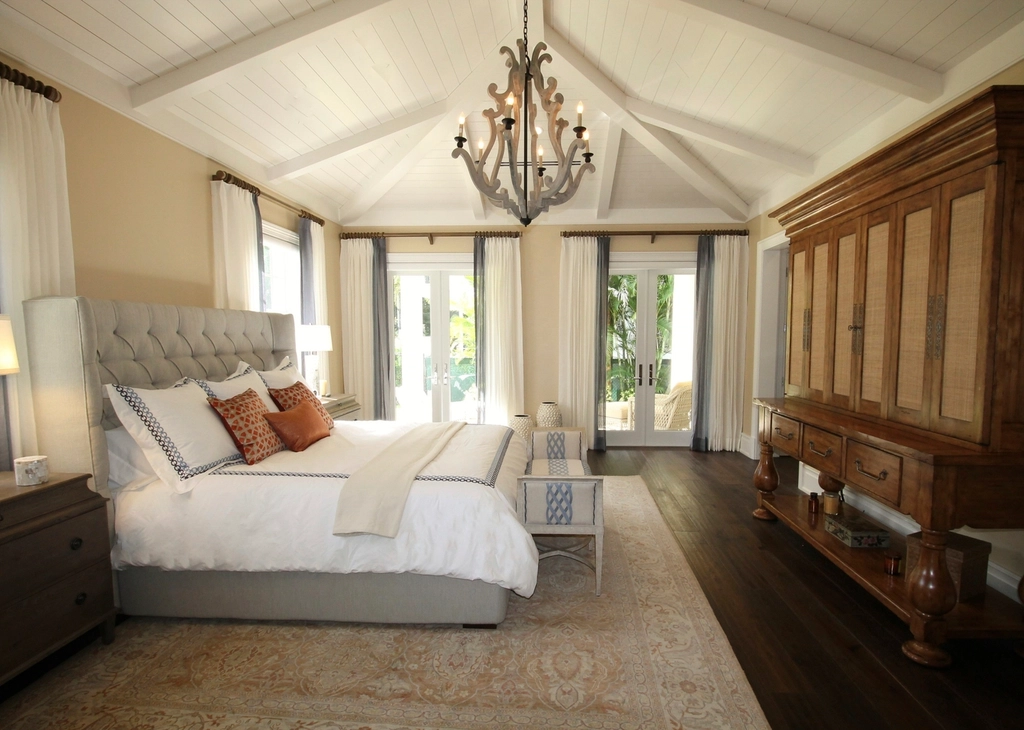
For a typical 12-by-12 bedroom, one ceiling fixture in the 1,500 to 2,500 lumen range, plus two bedside lamps, covers every job the room has. That number comes from a rule of thumb most lighting designers use: bedrooms want 10 to 20 lumens per square foot of ambient light from the ceiling layer, with lamps stacked on top for tasks. Rooms drift bigger or smaller, but the math scales in a straight line.
Do the math with square feet
Measure the room, multiply length by width, then multiply by 10 for the dim end and 20 for the bright end. A 10-by-10 room (100 square feet) lands at 1,000 to 2,000 lumens. A 12-by-12 room gives 1,200 to 2,400. A generous 15-by-15 primary bedroom wants 2,250 to 4,500, which is the point where a single center fixture starts to leave the corners dark.
| Room size | Ambient total | Sensible ceiling split |
|---|---|---|
| 10 × 10 | 1,000–2,000 lm | One flush mount |
| 12 × 12 | 1,200–2,400 lm | One fixture or 4 small cans |
| 15 × 12 | 1,800–3,600 lm | One fixture + one accent line |
| 15 × 15 | 2,250–4,500 lm | Two fixtures or a 6-can grid |
Two caveats keep the math honest. First, lumen ratings on the box assume a bare bulb; shades, diffusers and dark ceilings absorb 20 to 40 percent, so buy at the top of your range if the fixture hides the source. Second, wall color matters more than most guides admit — a navy accent wall eats light, a cream one returns it. Both caveats push the same direction: when in doubt, buy the brighter fixture and put it on a dimmer. If a calculator ever tells you a bedroom needs 3,000 lumens of ceiling light, close the tab: that number describes a hospital corridor, not a place where you sleep.
Shape and layout change the answer
Square rooms distribute light forgivingly. Long, narrow rooms do not — a single fixture centered in a 16-by-10 bedroom leaves both ends dim, and the fix is not a brighter bulb but a second fixture or two lines of recessed cans. Rule of thumb: any dimension over about 13 feet needs light spread along that axis, not just down.
Ceiling height plays in too. Under an 8-foot ceiling, a fixture throws a wide, short cone and covers well. In rooms with 10-foot ceilings, the same fixture covers a smaller floor circle, so add coverage area or choose a fixture with a wider beam. Walk-in closets and en-suite openings count as part of the footprint if the door stays open at night — that dark doorway next to a bright room makes everything adjacent look dimmer than it is.
One more thing the math ignores: windows. A bright bedroom needs almost no ceiling light at noon and full output at 6 a.m. in January. If the fixture sits on a dimmer — and it should — buy for the dark end of the day and dim down rather than buying for average conditions and never having enough. A bulb swap is cheap; a second ceiling opening is not. Most single-fixture bedrooms end up with an A19 LED in the 800 to 1,600 lumen class, and two of them behind one diffuser is a common trick in larger shades.
When one fixture is not enough
There is a moment in most bedrooms where the single center light stops doing its job: the closet stays dark, the reading corner stays dark, and you compensate by running lamps you already own. That is the signal to split the load instead of escalating the bulb. Two mid-size fixtures on separate switches beat one big fixture on a dimmer, because you can light half the room for half the evening.
Keep one modest ceiling fixture for ambient duty and add task light where you actually do things — nightstands for reading, a closet bar strip for dressing, a floor lamp for the chair. The four layers of bedroom light explains that division; the lumen numbers for the lamp side live in our bedside lamp guide.
How do you know the split is right? A quick walk test after dusk tells you more than any formula. Stand in the doorway with only the ceiling light on: if the corners hold their shape and the closet face is legible, the ambient layer is done. Then flip on the lamps one at a time and check the jobs — reading page bright, dresser top lit, hallway stub safe. Where a job fails, that is where the next lumen budget goes, and it almost never goes to the ceiling.
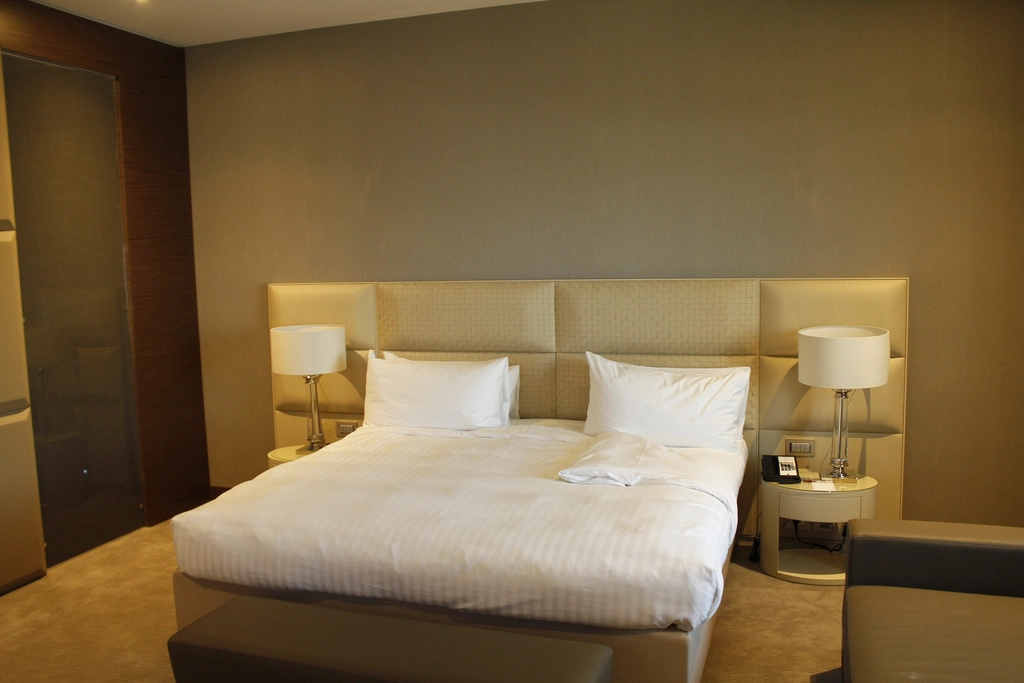
The number, then the fixture
Work the math first, shop second: square footage, times 10 to 20, split between ceiling and lamps, then pick fixtures that add up to the ceiling share. If you are still deciding between fixture types after the math, our breakdowns of flush versus semi-flush mounts and the recessed layout guide cover the two most common routes — pick one before buying bulbs.
Frequently asked
- Is one ceiling light enough for a bedroom?
- For a room up to about 12 by 12 feet, yes — one fixture producing 1,500 to 2,500 lumens covers ambient duty, as long as bedside lamps handle reading. Bigger rooms benefit from two fixtures or a fixture plus wall washing.
- Can you have too many ceiling lights?
- Yes. Beyond roughly 25 lumens per square foot, a bedroom starts to feel like a fitting room: flat, shadowless and strangely awake. More cans also mean more holes, more dimmer channels and more ceiling to repaint.
- How bright should a bedroom ceiling light be in lumens?
- Aim for 10 to 20 lumens per square foot of ambient output from the ceiling layer. A 120 square foot room lands at 1,200 to 2,400 lumens, which a single fixture or a pair of modest cans delivers easily.