Ceiling Lights
Dimmable Bedroom Ceiling Lights: What to Check
If you buy through links on this page we may earn a commission at no extra cost to you.
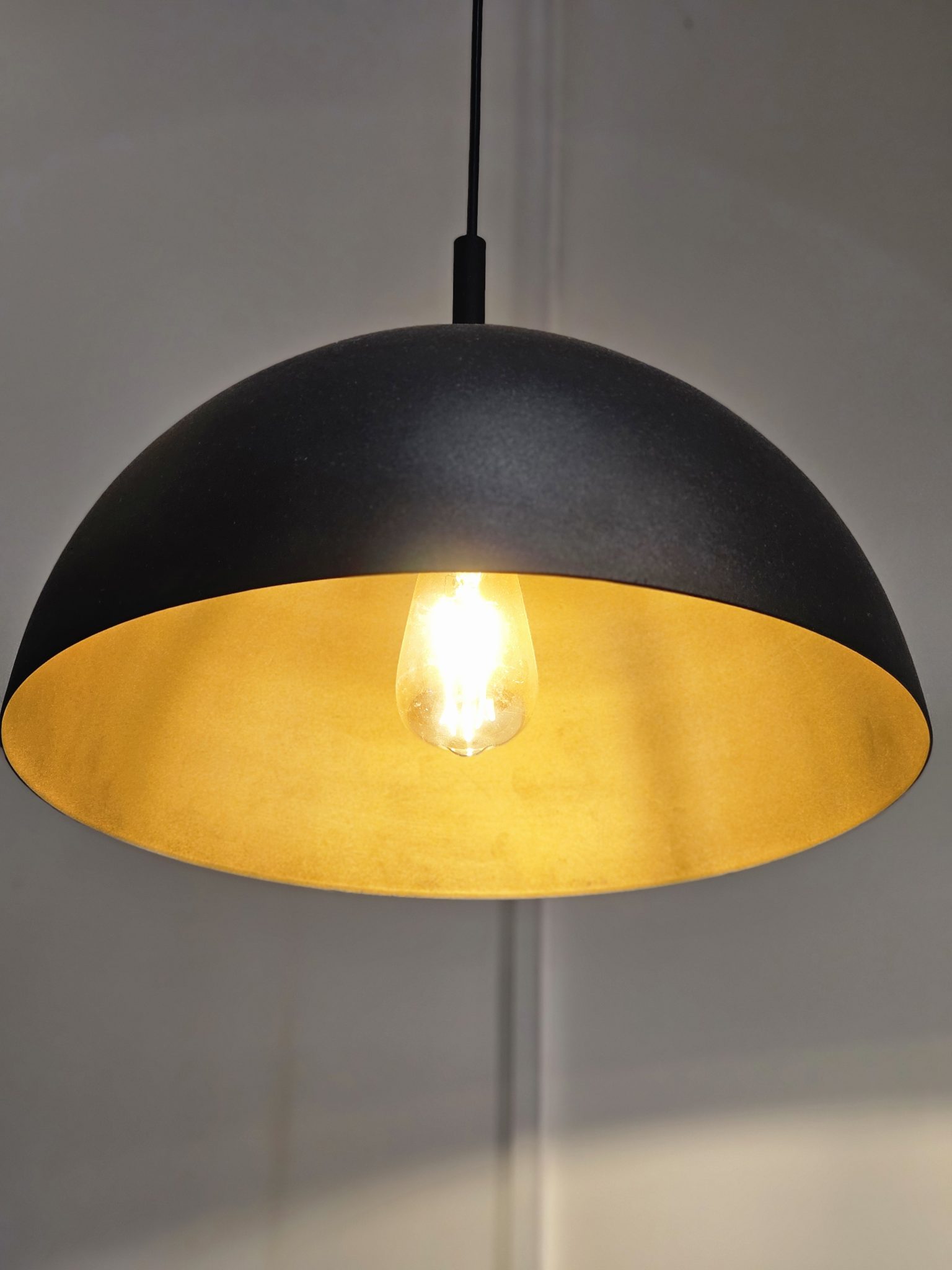
A dimmable bedroom ceiling light fails in one of three places, and the fixture itself is rarely the culprit. Dimming is a chain — wall switch, fixture, bulb — and the chain only works at its weakest link. Buy a $90 fixture and pair it with a $3 non-dimmable bulb on a 1990s leading-edge dimmer, and you get a room that flickers at 40 percent. Understand the chain first, then spend your money where it counts. The three fixtures below passed our checks against that chain.
What we look for
A stated dimming range. “Dimmable” alone tells you nothing. We look for fixtures and bulbs that publish a minimum, ideally down to about 5 percent, because the last 10 percent of dimming range is exactly where bedtime light lives.
Silence. No buzz at any setting, including the moment you hold a dimmer at its crossover point. Buzz means mismatched electronics, and it only gets worse as bulbs age.
No visible flicker at the bottom of the range. The cheap test: on a phone camera in slow-motion mode, a flickering dimmed light shows banding. A clean setup shows a steady frame.
Standard E26 sockets where possible. Integrated LED fixtures can be fine, but socketed ones let you upgrade the dimming behavior later by swapping a $6 bulb instead of a $70 fixture.
The three-link compatibility chain
Link one: the dimmer switch. Leading-edge (TRIAC) dimmers were designed for incandescent loads of 300 to 600 watts. A bedroom LED fixture draws 15 to 40 watts, which is why old dimmers behave erratically with them. A trailing-edge (ELV-style or “LED compatible”) dimmer handles low loads properly. Our dimmer switch primer covers the types and their quirks in plain words.
Link two: the fixture. What matters is whether the fixture passes dimming signals cleanly. Socketed fixtures simply carry power; integrated-LED ones contain a driver that does the dimming, and driver quality is everything. This is the real reason two fixtures with identical brightness can dim completely differently.
Link three: the bulb. If your fixture has sockets, the bulbs decide the dimming floor. Look for “dimmable” plus a stated low-end range on the box — and buy identical bulbs for every socket in the fixture, because mixed bulbs dim unevenly.
Two quick tests sort most setups before you spend anything. The camera test: film the dimmed light in slow-motion mode with a phone, and banding across the frames means flicker you can fix by changing link one, two or three — in that order of cheapness. The crossover test: run the dimmer slowly from low to full and listen. A brief buzz exactly at the crossover point is a nuisance rather than a fault; a sustained buzz at any setting is a mismatch that will not age out on its own. Ten minutes of testing tells you whether the problem is a bulb, a switch or a driver, and each answer costs a very different amount to act on.
Dimmer types in plain words
Only two families matter for a bedroom. Leading-edge (TRIAC) dimmers are the older, cheaper type still installed in most houses; they chop the front of each power cycle and expect heavy incandescent loads. Trailing-edge (ELV-style) dimmers cut the back of the cycle, start smoothly at tiny loads, and are labeled “LED compatible” in stores. For a bedroom fixture drawing 15 to 40 watts, trailing-edge is the correct default — it is the difference between a 5 percent floor and a fixture that stutters below 30 percent.
The third option is no wall dimmer at all: smart bulbs dim in software, which sidesteps compatibility entirely but puts brightness control in an app instead of the wall. That path is covered in the third pick below.

The three that held up
Continuous-dim socketed flush mount. A socketed fixture with a proper opal diffuser, usually $60-90. It does not dim anything itself — that is the point. Paired with quality dimmable LEDs and a trailing-edge switch, it reaches a genuine 5 percent floor. Verdict: the most flexible setup in the bracket because every part is upgradeable. Best for anyone who already owns a decent dimmer switch.
Warm-dim ceiling fixture. An integrated unit whose light shifts from roughly 3000K toward 2200K as it dims, typically $70-100. The color shift mimics an incandescent bulb cooling down, which reads as cozy rather than merely dark. Verdict: the best bedtime experience, at the cost of the integrated-LED lifespan question. Best for bedrooms where the ceiling light is the main evening light source.
Smart-dim ready fixture. A socketed or integrated fixture meant to run on smart bulbs or a smart module, $50-75. Dimming happens in the bulb or module, not the wall switch, so there is no dimmer to match. Verdict: the cleanest path if you are starting from a plain on/off switch. Best for renters and anyone avoiding electrical work.
If it still buzzes or flickers
Work the chain in order. First confirm every bulb is the same dimmable model. Then swap the wall dimmer for a low-load trailing-edge unit — this fixes the majority of cases. If an integrated fixture still misbehaves after that, the driver is the problem and no amount of bulb swapping will save it. And if you want the light to warm rather than just dim, our piece on warm-dim ceiling bulbs explains the technology behind that effect.
The picks
Continuous-dim socketed flush mount
Generic contemporary · $60-90 · Rated 4.4/5
The most flexible dimming setup: standard sockets let you tune bulbs, dimmer and floor over time instead of replacing the fixture.
Best for: Bedrooms that already have a compatible dimmer switch
- Reaches a true 5 percent floor with the right bulbs
- Silent across the full range on a trailing-edge dimmer
- Every component upgradeable or replaceable
- Dimming quality depends on bulbs you buy separately
- Needs a trailing-edge wall dimmer to shine
Warm-dim ceiling fixture
Generic contemporary · $70-100 · Rated 4.3/5
The best bedtime light in the bracket: color temperature slides from 3000K toward 2200K as brightness falls, mimicking a cooling incandescent.
Best for: Bedrooms where the ceiling light carries the evening hours
- Color shifts warm as it dims, not just darker
- Integrated driver gives consistent dimming behavior
- No bulbs to match or swap
- Integrated LED means full replacement when diodes fade
- Needs a compatible dimmer despite the premium price
Smart-dim ready fixture
Generic contemporary · $50-75 · Rated 4/5
The cleanest upgrade path from a plain on/off switch: dimming lives in smart bulbs or a module, so no wall work is required.
Best for: Renters and anyone avoiding electrical work
- No dimmer switch to buy, match or install
- Dimming floor controlled in software, often down to 1 percent
- Works with existing wiring as-is
- Depends on hub or app availability for control
- Smart bulb minimum brightness varies by brand
| Model | Dimming floor | Color shift | Wall dimmer needed | Bulbs replaceable | Price |
|---|---|---|---|---|---|
| Continuous-dim socketed | ~5% | None | Yes, trailing-edge | Yes, E26 | $60-90 |
| Warm-dim fixture | ~10% | 3000K to 2200K | Yes, compatible | No, integrated | $70-100 |
| Smart-dim ready | ~1-5% (bulb) | Set in app | No | Yes, smart bulbs | $50-75 |
Frequently asked
- Why does my dimmable LED buzz at low brightness?
- The dimmer and the bulb disagree about how to chop power. Older leading-edge dimmers expect high minimum loads; most LEDs sit well below that. Swapping to a trailing-edge dimmer rated for low wattage usually silences it.
- Can I put smart bulbs on a wall dimmer?
- Do not. A wall dimmer feeding a smart bulb starves its electronics and causes dropouts and shortened life. Set the wall switch to plain on/off and control brightness through the bulb's app or a smart button instead.
- How low should a good dimmable ceiling light go?
- A quality setup dims to roughly 5 percent of full output — a faint ember rather than a bright room. Fixtures that bottom out at 20 to 30 percent feel like they are only pretending to dim.