Ceiling Lights
Bedroom Ceiling Light Ideas Beyond the Flush Mount
If you buy through links on this page we may earn a commission at no extra cost to you.

The flush mount that came with your bedroom was chosen by whoever spent the least, not by anyone who sleeps there. You can do better for less than you probably expect: every idea below either works with the wiring box already in your ceiling or skips the ceiling entirely, and none of them requires living with that glossy mushroom dome for another year.
Six ideas worth stealing
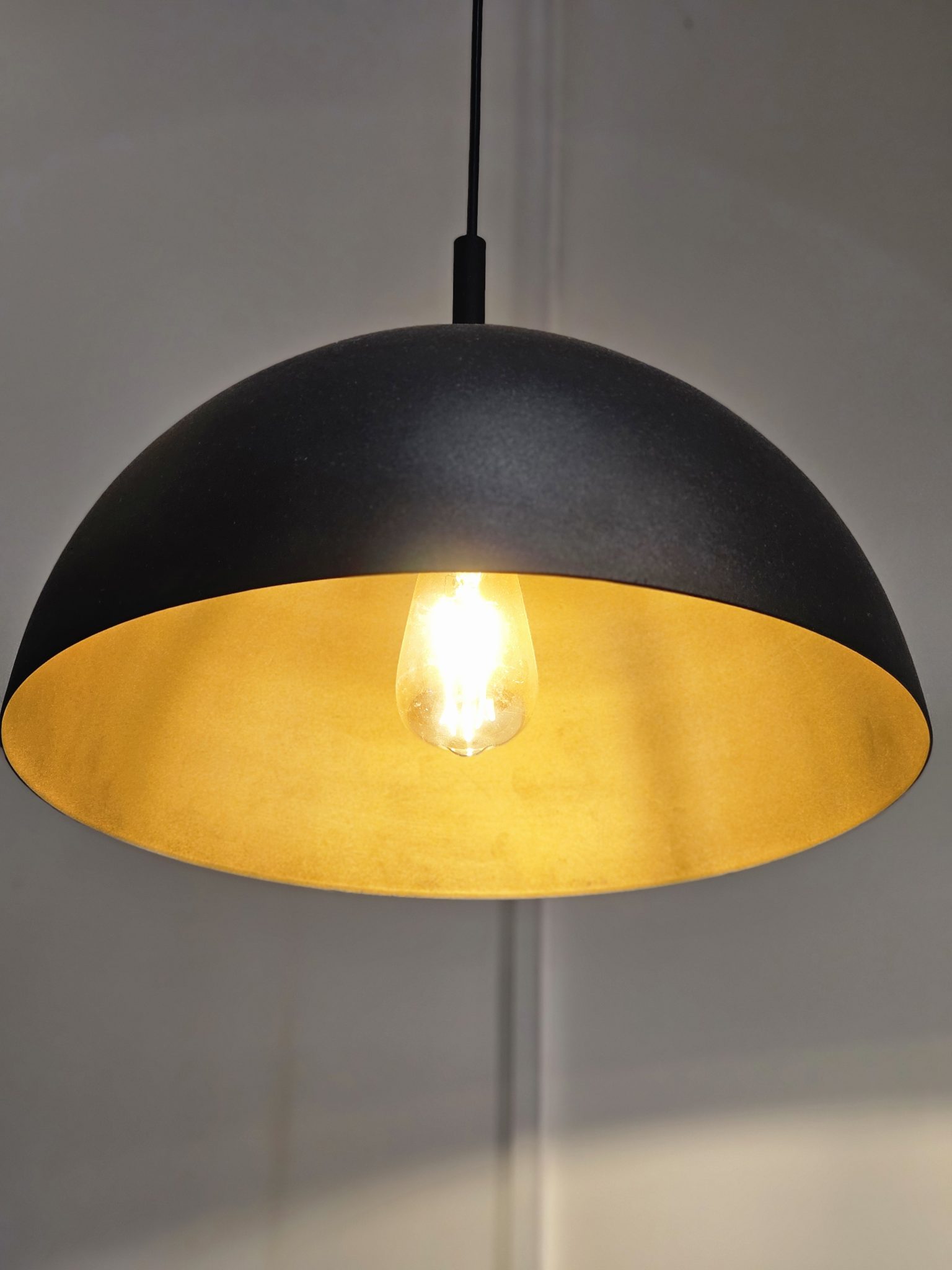
A pendant hung low over the nightstand corner. Instead of one bright disc in the middle of the room, hang a pendant so its shade sits about seven feet off the floor, positioned toward the side of the bed. You get a pool of light exactly where you sit and read, and the rest of the room stays calm and dim. Rooms with low ceilings should pick a wide, shallow shade rather than a tall lantern.
A semi-flush with a shade that has a personality. The cheapest transformation is a swap: the wiring stays, the glass dome goes. A linen drum, a rattan weave or an opal globe changes the whole character of the room in fifteen minutes, and most swaps cost between $30 and $90.
Cove lighting along one edge. An LED strip run behind crown molding, a ceiling valance or the top of a tall headboard throws light up at the ceiling and lets it bounce back down. The result is soft, shadowless and completely glare-free — the closest a ceiling ever gets to candlelight. It also layers beautifully with whatever else you already own.
Two wall sconces and no ceiling light at all. Plug-in sconces mounted at shoulder height on either side of the bed free up nightstand space and make the overhead fixture optional. Turn the old flush mount’s breaker off and leave it dark, or have an electrician remove it and patch the ceiling.
A ceiling fan with a real light kit. If air movement matters as much as lighting, a fan with a dimmable, warm-toned kit covers both jobs in one ceiling box. Skip the kits with a single fixed glass bowl; they hide the bulb, swallow half the output, and give you brightness you cannot adjust.
Recessed cans on a dimmer, placed toward the walls. Four cans positioned about two feet in from the walls wash the perimeter with light instead of dumping it straight down on the bed. Perimeter placement makes a small room feel wider and keeps the center of the ceiling — and your sightline lying in bed — completely clear.
What each idea costs and demands
The semi-flush swap is the easiest win: a new fixture runs $30-90 and the job is two wire nuts and a bracket, done in under half an hour with the breaker off. A pendant needs the same wiring plus a canopy and sometimes a longer cord, so budget $40-120 and a full hour. Cove lighting is the cheapest effect per dollar — a quality strip plus a plug-in driver costs $30-60 — but the payoff depends on a clean, straight run, so measure twice before you stick anything down.
Plug-in sconces sidestep wiring altogether: $50-120 for a pair, plus cord clips and a little patience with cable routing down the wall. A fan-and-kit combination runs $150-400 installed, more if the ceiling box needs bracing, which is electrician territory. Recessed lighting is the serious-money option: an electrician typically charges $150-250 per can in an existing ceiling, so the four-can perimeter plan lands between $600 and $1,000. Worth it in a long-term home; hard to justify in a rental you plan to leave.
Two ideas to skip
Flat color-changing disc lights. The ultra-thin RGB discs that glue to the ceiling are marketed for bedrooms, and most of them fail at the basics: minimum brightness too high, whites too cold, and a remote that goes missing in week two. A warm-dim bulb in the fixture you already own does the sunset job better for less money.
A chandelier directly over the bed. It photographs beautifully and lives badly. You dust it from a ladder, you bump it every time you sit up, and every movement on the mattress transmits a sway into the frame. If you love the look, hang it at the foot of the bed or outside the sleeping zone entirely.
Choosing one for your room
Match the idea to the room’s biggest complaint. If the room feels flat and institutional, swap the shade first — fifty dollars and it is done tonight. If reading happens in bed but the overhead fixture is the only source, the low pendant or the sconce pair solves it. If evenings feel harsh no matter which bulb you buy, cove lighting is the answer, because bounced light physically cannot glare at you. And if stuffiness bothers you more than lighting, the fan kit improves both while you are up on the ladder anyway.
One number to sanity-check any of these: the ceiling layer wants roughly 1,500 to 3,000 lumens in total, dimmable down to almost nothing after dark. Our guide on how many ceiling lights a bedroom needs walks through the math room by room, and the cove lighting guide covers the strip build step by step. More ideas live in our ceiling lights category. Honestly, the flush mount you already own is not evil — it is just unfinished.
Frequently asked
- Can I swap a flush mount for a pendant in a rental?
- Usually yes, if you keep the original fixture in a closet and reinstall it when you move out. The swap uses the same wiring box, so nothing permanent changes. Confirm your lease allows fixture swaps and keep photos of the original wiring.
- How bright should a bedroom ceiling light be in total?
- Aim for roughly 1,500 to 3,000 lumens across the whole ceiling layer, and put it on a dimmer so you can drop to near zero at night. A single fixture delivering 800 to 1,600 lumens covers most rooms up to about 150 square feet.
- Do any of these ideas require an electrician?
- Swapping a fixture on an existing box usually does not, as long as you turn off the breaker and the box is in good shape. Recessed cans, new ceiling boxes, or any fan that needs bracing are electrician work and worth the money.