Smart Lighting
Sleep Timers and Fade-Outs on Smart Lights
If you buy through links on this page we may earn a commission at no extra cost to you.
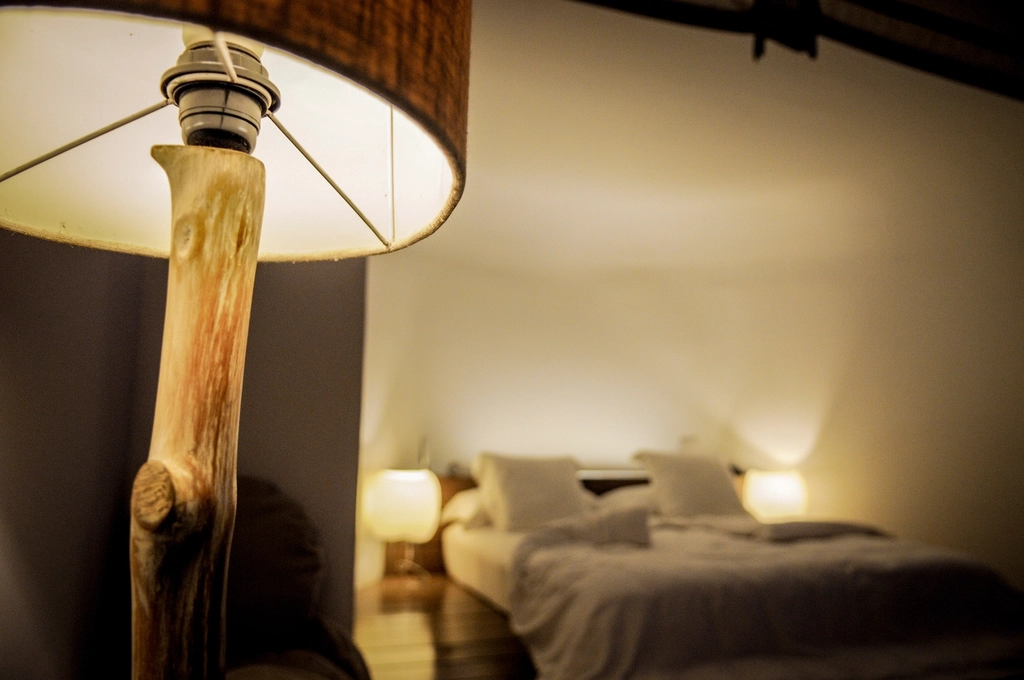
Nobody ever lay awake wishing the light would stay on. A lamp that dims itself to zero over half an hour after you fall asleep is one of the cheapest quality-of-life upgrades in smart lighting — and one of the least used, mostly because the setting hides three menus deep in most apps. This page walks through the ways to set it, the fade length that actually matches how people fall asleep, and the small details that make the whole thing feel automatic rather than gimmicky.
Why a fade beats a hard switch-off
A sudden blackout does two things your sleeping brain notices: it registers as a change in the environment, and it gives you one more thing to adjust to during the most fragile minutes of falling asleep. Light dropping gradually does neither. There is no click, no moment where the room changes state — the last thing you see simply gets softer until it is gone.
The fade also borrows an idea your body already understands. Light descending slowly resembles sunset, and sunset is the oldest signal that sleep is coming. You are not tricking your biology with a 30-minute dimming curve, but you are removing the contrast between “bright room, awake” and “black room, asleep” that makes the transition feel abrupt. For a fuller version of that logic across the whole evening, the circadian lighting setup pairs naturally with a timer.
It also matters for whoever shares the bed. A partner reading beside you does not need to reach across and darken your side of the room, and you do not need to wake them at midnight because the lamp you forgot is still burning at 40 percent.
Three ways to set a timer
Option one: the bulb app’s built-in sleep timer. Most smart bulb apps include a “sleep timer” or “fade off” action, usually reachable by long-pressing the device or opening a scenes menu. You pick a duration — typically 1 to 60 minutes — and the bulb dims steadily to zero. This is the simplest route because it needs no routine editor, and many apps let you trigger it from a widget so the last tap of the night is one screen away.
Option two: a routine with a delay. Both major voice platforms let you build this: a phrase like “goodnight” dims the bedside lamp to 15 percent, waits 30 minutes, then turns it off. Routines take slightly longer to build than a timer but survive app changes and can bundle other actions — a fan plug, a hallway light for the dog, the ceiling lamp off immediately. The delay-based version also means you can say the phrase at any hour and the timing still works.
Option three: a smart plug for dumb lamps. A lamp with a normal switch becomes timer-capable through a smart plug, which costs in the $10-15 range. The plug turns power off on schedule, so there is no fade — the light stops, full stop. It works well for people who mostly want the light gone, and it is the only option for lamps that take bulbs without any smart features at all.
Tuning the fade to your sleep
Start brightness matters more than duration. A timer starting from 40 percent feels like a slow blink; one starting from 10 to 15 percent feels like drifting off. Build the fade on top of a dim scene rather than the lamp’s full output, and if the bulb cannot dim smoothly at the bottom of its range — a known limit covered in why smart bulbs won’t dim as low as you want — end the routine with a hard off at the five percent mark so the last visible state is genuinely dark.
Duration is a one-time experiment. Frankly, the difference between 20 and 30 minutes is invisible until you set it wrong once and lie there waiting for a light to finish its performance. Test on an evening when you feel alert, note whether the light is still glowing when you would rather it were gone, and adjust. Keep the fade to one lamp; a whole-room sunset is theater, and the ceiling light should simply be off before you get into bed anyway.
One refinement for shared beds: stagger the timers. If you fall asleep faster than your partner, give the reading side its own manual control and put the fade only on your lamp. Most apps handle this cleanly as long as each bulb is named by position — “left lamp,” “right lamp” — rather than both being called “Bedroom Lamp,” which is the naming mistake that makes every later automation harder to build.
The part everyone forgets
Timers only cover the evening. Morning needs the opposite choreography — light arriving gradually rather than leaving — and if your routine editor treats both as scenes, keep them clearly separate so a scheduled fade-out never collides with a scheduled wake-up. Test the full cycle once on a weekend afternoon nap: fall asleep under the fade, confirm the lamp is fully dark within the window you set, and check that nothing fires unexpectedly at night. Ten minutes of testing buys you a room that handles itself every night after, which is the quiet luxury this whole setup is for. An amber night light completes the picture for the trips the timer cannot plan.
Frequently asked
- How long should a bedside fade-out last?
- Twenty to thirty minutes suits most people, and fifteen is enough if you fall asleep fast. Set it, test it on a night when you feel alert, and adjust once. The goal is for the light to reach zero around the time you stop noticing it.
- Will the light switching off disturb my partner?
- A gradual fade ends in silence and darkness, so it is far less disruptive than a switch click or a sudden blackout. If one of you reads later, put the timer only on the sleeper's lamp and let the reader keep manual control of their own light.
- Can I add a sleep timer to a lamp that is not smart?
- Yes. A smart plug between the wall socket and the lamp gives you app-based timers and routine delays for a few dollars. Dimming is not possible through a plug, so pair the timer with a low-watt bulb for a similar effect.