Bedside Lamps
Matching Lamps or a Mismatched Pair?
If you buy through links on this page we may earn a commission at no extra cost to you.

Neither answer is the default you were sold. A perfectly matched pair is a furniture-showroom habit — safe, symmetrical, a little lifeless — while a completely random mismatch usually reads as an accident rather than a choice. What works is the middle path: two lamps that share one clear trait, whether that is shade shape, base material or height class, while everything else differs on purpose.
Where the matched pair came from
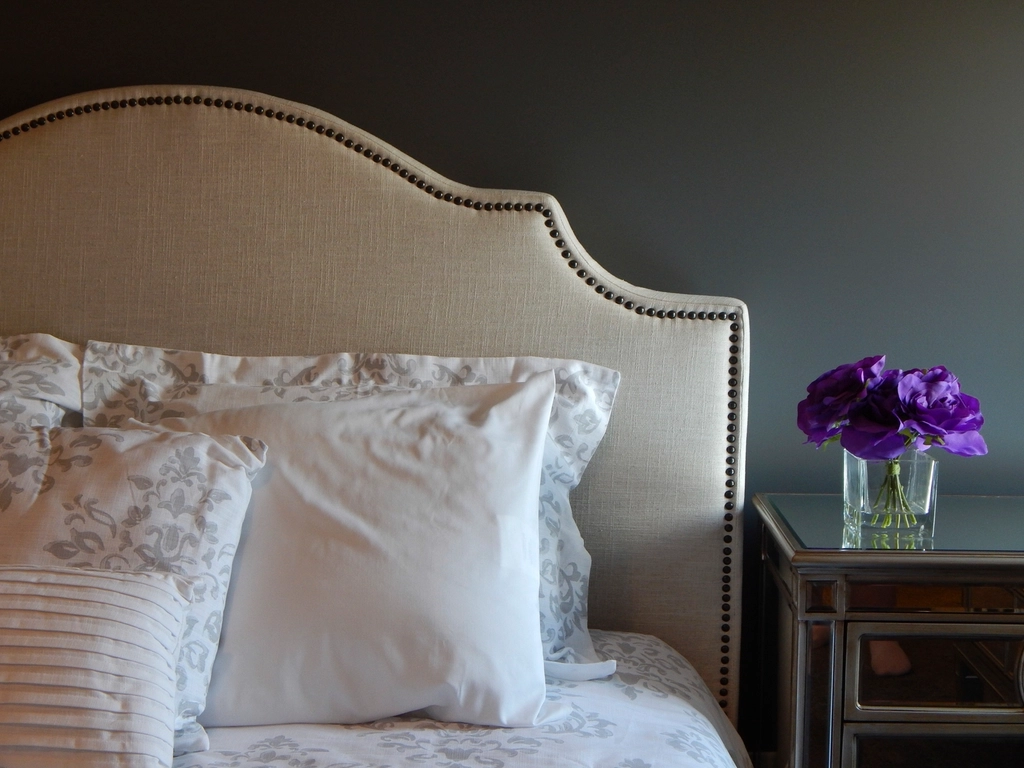
Credit hotels. A matched lamp on each side of a wide headboard photographs perfectly, survives decades of design trends, and needs zero decision-making from anyone who walks into the room. Symmetry does something real to the eye: it signals order and calm, and it quietly hides sins, like nightstands that do not actually match or a bed pushed slightly off-center against a wall.
That is a genuinely good default for guest rooms, staged homes, and anyone who wants the bedroom decided once and never again. The matched pair is not wrong. It is just optimized for looking right, not for being right about how two different people use light at night.
It has practical upsides beyond looks, too. Buy two of one lamp and you share spare parts — one spare bulb type, one replacement shade that fits either side, one instruction set. If one dies in three years, you already know what to reorder. And a matched pair sets a ceiling of visual noise: the bed wall stays quiet, which leaves the rest of the room free to carry color and pattern.
What symmetry buys, and what it costs
The cost shows up the moment two sleepers have different habits. One reads until midnight, the other falls asleep in four minutes; one checks a phone, the other wants total darkness. Two identical lamps give both people the same light whether it fits or not — usually too much spill for the sleeper and not enough aim for the reader. Honestly, the matched pair is often wrong for at least one of the two people sleeping under it, and neither lamp knows it.
There is a middle cost too: two lamps means two footprints on already small nightstands, and matching pairs tend to come in one mid-size that fits neither a tiny table nor a deep dresser well.
Symmetry has one more genuine argument going for it: small rooms. In a bedroom where the bed fills most of the wall, a matched pair visually extends the headboard and makes the whole corner look planned rather than accumulated. The narrower the room, the more that effect pays. If your bed wall is cramped, symmetry is doing quiet work for you — mismatch there and the room reads cluttered before anyone switches a light on.
Mismatching on purpose
A mismatch works when the pair still talks to each other. The workable rule: share exactly one visual trait and vary the rest. Same empire shade shape, different base heights — one tall and slim for the reader, one squat and wide for the early sleeper. Same brushed metal finish, different silhouettes — a globe on one side, a cylinder on the other. Same linen fabric in two tones. Pick the trait that your room already repeats somewhere, because a mismatch lands best when the shared trait echoes a third object in the room.
Keep the heights within about 4 inches of each other unless you are deliberately going tiered, and keep the bulbs identical in color temperature — 2700K on both sides, no exceptions. The glow is what makes two objects read as a pair; two lamps throwing different shades of white will look mismatched even when the bodies are identical.
The shared trait you pick should already exist in the room. A ceramic base echoes ceramic vases or planters; a brass stem echoes drawer pulls or the picture frame above the dresser; a linen shade echoes the bedding. Walk the room once, pick the material that shows up twice already, and use it as the pair’s connective tissue. If nothing repeats anywhere, start with shade shape — it is the strongest unifier because it catches the eye as the same silhouette from across the room, even at different heights and in different colors.
Mismatched pairs also open up secondhand sourcing, which matched pairs close. Vintage shops almost never have two of anything, but they reliably have one tall brass lamp and one squat ceramic one in the same warm tones. Building a pair from two eras costs less than buying matched new and produces a room that looks collected rather than ordered. Give it one afternoon and a tape measure, not a design degree.
Function first, then the pair
Decide what each side of the bed needs before deciding what looks good. The reader’s side wants a taller lamp with a brighter, ideally dimmable bulb; the other side can drop to a smaller, lower-output lamp or none at all. Once the function is mapped, the matching question answers itself: identical needs take an identical pair, different needs take a mismatch with one shared trait. Sleepers with equal habits and equal tastes are the only case where the showroom default also happens to be the right answer.
The brightness numbers per job are in how many lumens a bedside lamp needs, and lamps that dim low enough for two-person compromises are covered in dimmable bedside lamps that actually go low. For the wider catalog, browse all bedside lamps.
Frequently asked
- Do two different lamps need the same bulb color temperature?
- Yes, and this matters more than the lamps themselves. Mismatched bodies with mismatched light (one 2700K, one 4000K) look broken; mismatched bodies with the same warm glow look intentional. Set both bulbs to the same kelvin, ideally 2700K, before judging the pair.
- Can one side of the bed simply skip the lamp?
- It can, if the non-lamp side gets its light from somewhere — a wall-mounted reading light, a headboard strip, even a pendant centered over the bed. Asymmetry reads as a decision only when the dark side is not actually dark for the person sleeping there.
- How different is too different for a mismatched pair?
- Past three differences at once. One shared trait plus different heights works; add different shade shapes, different finishes and different bulb colors and the pair stops talking to each other. Keep heights within about 4 inches unless you are deliberately tiering.