Buying Guides
Lumens vs Watts: Stop Buying by Wattage
If you buy through links on this page we may earn a commission at no extra cost to you.
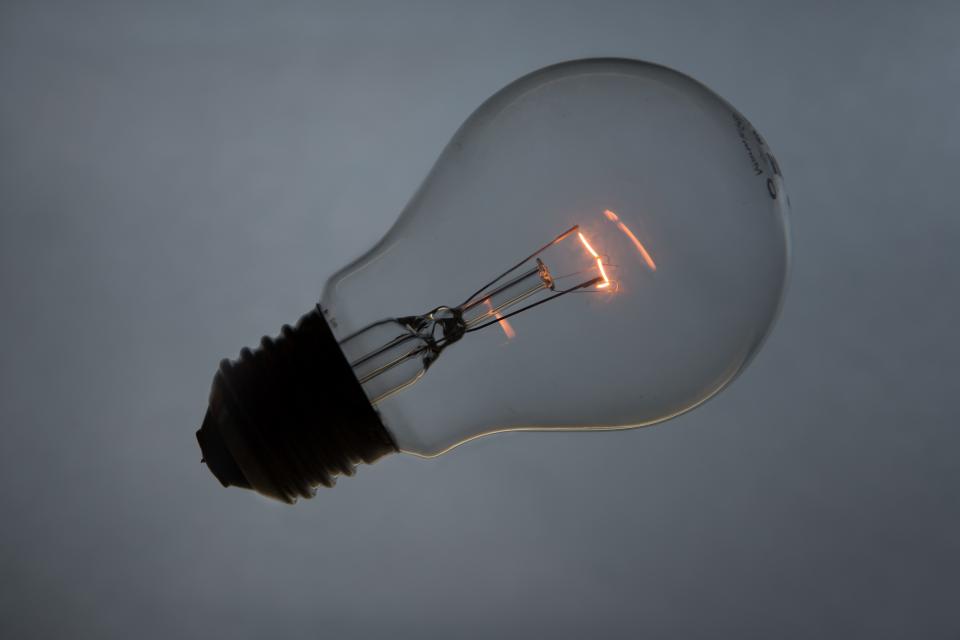
A watt is what a bulb eats. A lumen is what it serves. When every bulb was incandescent, wattage worked as a rough shortcut for brightness, because all bulbs turned electricity into light at about the same rate. LEDs broke that link: two modern bulbs can draw the same 9 watts and differ by hundreds of lumens, or produce the same 800 lumens while drawing 6 and 11 watts. The shortcut now misleads more often than it helps — and that mismatch is the entire subject of this piece, with the only arithmetic it needs sitting in the table below.
The conversion, in one table
| Old incandescent | Lumens it actually produced | Typical LED draw |
|---|---|---|
| 40W | ~450 lm | 5–7W |
| 60W | ~800 lm | 8–10W |
| 75W | ~1,100 lm | 10–13W |
| 100W | ~1,600 lm | 13–17W |
The equivalence claims printed on packages drift by ten percent or more in either direction, because every manufacturer defines “equivalent” a little differently. Treat the table as a starting point, then read the lumen number as the fact and the wattage as trivia. Read the table in reverse and a modern annoyance explains itself: people who swap a 100W incandescent for a “100-watt equivalent” LED delivering only 1,100 lumens notice the room got darker, because the label promised a wattage rather than a brightness — while the smaller lumen line on the same package was quietly telling the truth all along. If a package prints only the equivalence and hides the lumen figure, treat the omission as the review.
For where those lumen figures should land task by task in a bedroom — reading, winding down, night trips — our bedside lamp lumen guide covers the breakdown.
Why wattage is still printed on LED boxes
Three reasons, two legitimate and one not. The illegitimate one first: shoppers trained decades ago still reach for the familiar number, so “60-watt equivalent” survives as a label aimed at memory rather than physics. Honestly, it is the least useful fact on the box.
The first legitimate reason is fixture safety. The “max 60W” printed inside an old lamp referred to the heat an incandescent bulb pumped into the socket, and LED bulbs — which run cool at the glass but warm at the driver — changed what that limit means. A 9-watt LED rarely threatens a socket, but inside an enclosed globe its driver sheds heat with nowhere to go, which is why LED packages print “not for enclosed fixtures” and why the old watt rating still deserves a glance rather than a laugh. The second is dimming: dimmer circuits are rated in watts, and a bulb sitting below a dimmer’s minimum load is the classic cause of flicker and dead zones. Those ratings remain genuinely watt-based, which keeps the number on the box alive. The practical rule that follows: on any dimmed circuit, add up the bulb wattages and compare against the dimmer’s printed window before assuming something is broken — a good share of flicker complaints die at exactly that step.
Where watts genuinely still matter
Enclosed fixtures are the big one. A globe shade or a flush-mount housing traps heat, and the driver inside an LED ages faster in that trapped air — respect the fixture’s rating even though the LED draws a fraction of it. Strings and cheap lamps with thin wiring deserve the same respect.
There is also the electricity math, which is friendlier than most people expect. Swapping one 60W incandescent for a 9W LED used three hours a day saves roughly 56 kilowatt-hours a year — a coffee or two per fixture, annually. Multiply by a whole house and the swap pays for itself inside a year.
Then there is the honest case of deliberately inefficient light. The filament-style Edison bulbs sold for their looks sacrifice efficiency on purpose: a pretty glowing cage converts a larger share of its watts into heat and atmosphere — often as little as 70 lumens per watt, half of what a standard LED manages. That is a legitimate aesthetic choice, not a physics error. It simply means the watt number has become a style tax, collected in small amounts on every electric bill; know you are buying ambience, and check the lumens anyway.
The habit to build instead
Three numbers, in order. Lumens answer “how much light” — the only number that predicts brightness. Kelvin answers “which color of white” — 2700K is the bedroom default, and the full scale is decoded here. CRI answers “how honestly the bulb renders color”, which matters more up close than most shoppers expect. All three appear on the lighting facts panel; our label walkthrough shows where each one hides.
Ten seconds at the shelf is all the new habit takes: find the lumen figure, match it to the table above, confirm the K, glance at CRI. A bedside bulb done properly reads like this — 800 lm, 2700K, 85 CRI — three facts, no arithmetic. Do that on two purchases and the equivalent-wattage line stops being a shorthand and becomes what it really is: a nickname a marketing department gave a bulb decades ago and never updated.
Watts tell you the bill. Lumens tell you the light. Only one of those gets displayed on a nightstand.
Frequently asked
- How many lumens is a 60-watt bulb?
- A classic 60-watt incandescent produced roughly 800 lumens, so look for 800 lm or slightly more from the LED that replaces it. Most bulbs labeled 60-watt equivalent land between 700 and 900.
- Does a higher-watt LED always mean a brighter bulb?
- No. Lumens decide brightness; watts only decide consumption. An efficient 10W bulb can outshine an inefficient 13W one, which is exactly why the watt number stopped being useful.
- Do smart bulbs waste power on standby?
- A small amount: the radio and electronics draw under a watt while the bulb waits for a command. Across a bedroom's worth of bulbs that comes to a few dollars a year — cheaper than the candles it replaces.