Buying Guides
How Long Do LED Bulbs Really Last?
If you buy through links on this page we may earn a commission at no extra cost to you.
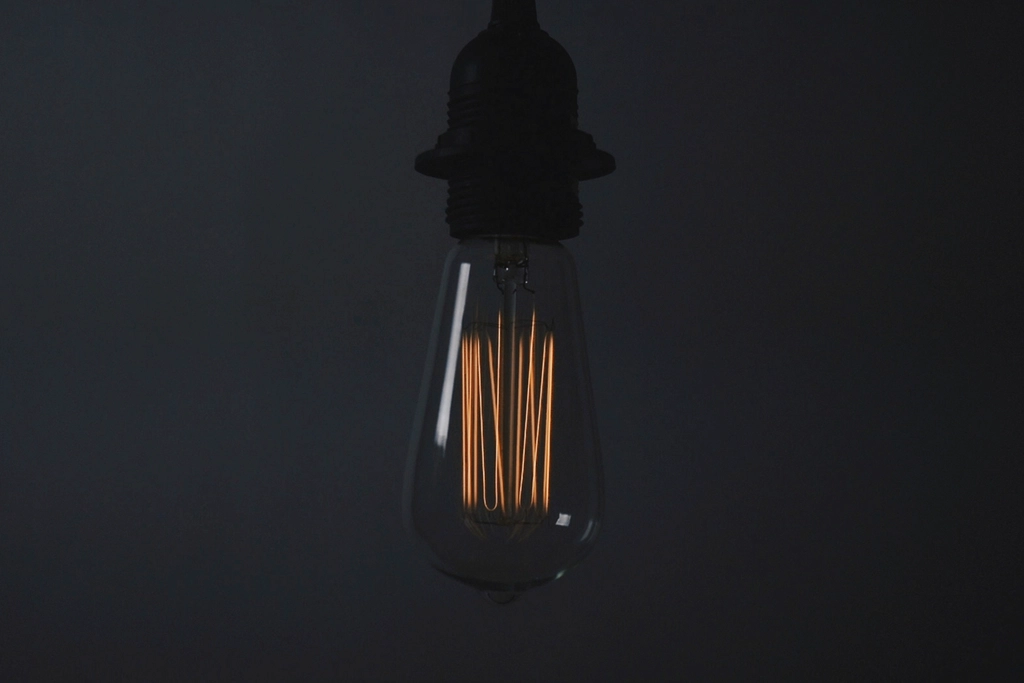
A well-made LED bulb is rated for 15,000 to 25,000 hours — but the “15 years” printed on the box assumes three hours of use per day, and the rating tracks the diode, not the small power supply soldered behind it. In a bedroom lamp that runs most evenings, a good bulb realistically gives you five to eight years, and a bargain-bin one in a hot enclosed fixture can give up in two. The gap between the number and reality has a cause, and it is mostly one word: heat.
What the hour rating actually counts
The hours on the box are not “until the bulb goes dark”. Most ratings measure the point where output falls to 70 percent of original brightness — engineers call it L70 — and a bulb that dims past that line may keep glowing for thousands more hours, just worse. The rating also assumes a laboratory-pleasant environment: three hours on, twenty-one off, room temperature, no vibration.
Do the math with your own habits and the numbers change fast. At three hours a day, 25,000 hours stretches past 22 years. Run a bedside lamp five hours every evening and the same bulb is an 11-to-13-year proposition on paper. String lights left on from dinner until midnight chew through a rating about four times faster than the box suggests. None of this makes the rating dishonest, but it does mean the years figure is a conversion, not a promise.
What actually kills an LED bulb
Heat is the whole story, mostly. The light-emitting diode itself can run for 50,000 hours or more, but it sits on a small circuit board with a driver — capacitors, resistors, a control chip — and capacitors age quickly when kept warm. An LED inside a fully enclosed glass globe or a sealed ceiling fixture can easily run 20 to 30 degrees hotter than one in open air, and that alone can halve its rated life. The dirty secret of LED ratings is that the number describes the diode, not the cheap power supply bolted behind it.
The second killer is the driver quality itself. A no-name bulb uses the cheapest capacitors available, and its 15,000-hour claim is a spreadsheet number rather than a tested one. Power spikes take a share too — one nearby lightning event can take out a whole string of bulbs at once. What does not matter nearly as much as people fear is switching: unlike the fluorescent tubes your office used, LEDs do not wear out from being toggled on and off. The hallway light that flicks fifty times a day is fine.
How to buy for longevity
Three checks separate the bulbs that last from the bulbs that migrate to the trash drawer. First, if the bulb goes into an enclosed or semi-enclosed fixture, the package must say “suitable for enclosed fixtures” — this marking means the design tolerates the extra heat. Second, treat the warranty length as a proxy for driver quality: a bulb backed for five years is built differently from one backed for two, because the manufacturer has run the replacement math. Third, prefer a bulb that runs at a lower wattage for the same lumens; higher efficiency means less waste heat, and less heat means everything on that little board lives longer.
Quantity matters less than people expect, too. One bulb dying in a four-bulb ceiling fixture turns the whole room patchy, so buy the same brand and model in one multi-pack for any multi-bulb fixture — matching drivers age at matching speeds, and the room stays even for longer. Keep one spare per fixture type in a drawer; LEDs fail on their own schedule, not on shopping days.
For bedside duty specifically, longevity is not even the top priority — dimming smoothness and a true 2700K color matter more to your evenings than an extra five years of rated life. Buy the pleasant bulb first; lifespan follows quality anyway, since the same engineering that makes a bulb dim beautifully also tends to make it survive. The right codes to look for are covered in our bulb shapes and bases guide, and if you want the bulb to dim warmer as it dims lower, check the phrase “warm dim” on the box — our warm-dim ceiling bulb guide explains the trick.
When replacing early is the smarter move
LEDs rarely announce their deaths; they fade out in stages, and some of those stages are worth acting on. A bulb that flickers only on a dimmer, or buzzes softly at low settings, is telling you its driver is aging — replace it before it starts strobing at midnight. A bulb whose color has drifted visibly warmer or pinker than its neighbors has passed its best years. And if a fixture now looks patchy because one bulb glows duller than the rest, swap all the bulbs in that fixture at once and keep the odd one for a closet. Honestly, waiting for total failure is the least pleasant way to manage light; the room tells you long before the bulb does. The one place where early replacement gets complicated is smart bulbs, whose dimming quirks and app-side settings can masquerade as hardware death — our smart bulb dimming guide untangles which is which.
Frequently asked
- Why did my LED bulbs die after two years?
- Almost always heat or a cheap power supply, not the diode itself. An enclosed fixture traps heat around the driver electronics, and bargain bulbs use the cheapest capacitors on the market. Both cut a 20,000-hour rating down to a fraction.
- Does switching LEDs on and off a lot wear them out?
- Barely. Unlike old fluorescent tubes, LEDs take no meaningful damage from frequent switching, so closet and hallway lights can be toggled freely. Heat is the only factor that shortens LED life in any real way.
- Are long-warranty bulbs worth the premium?
- In hard-to-reach or fully enclosed fixtures, yes — the warranty signals a better driver and climbing a ladder is expensive. In a bedside lamp you can reach in two seconds, a decent mid-price bulb is the smarter buy.