Bedside Lamps
Lamp Shade Shapes Explained: Drum, Empire, Bell
If you buy through links on this page we may earn a commission at no extra cost to you.
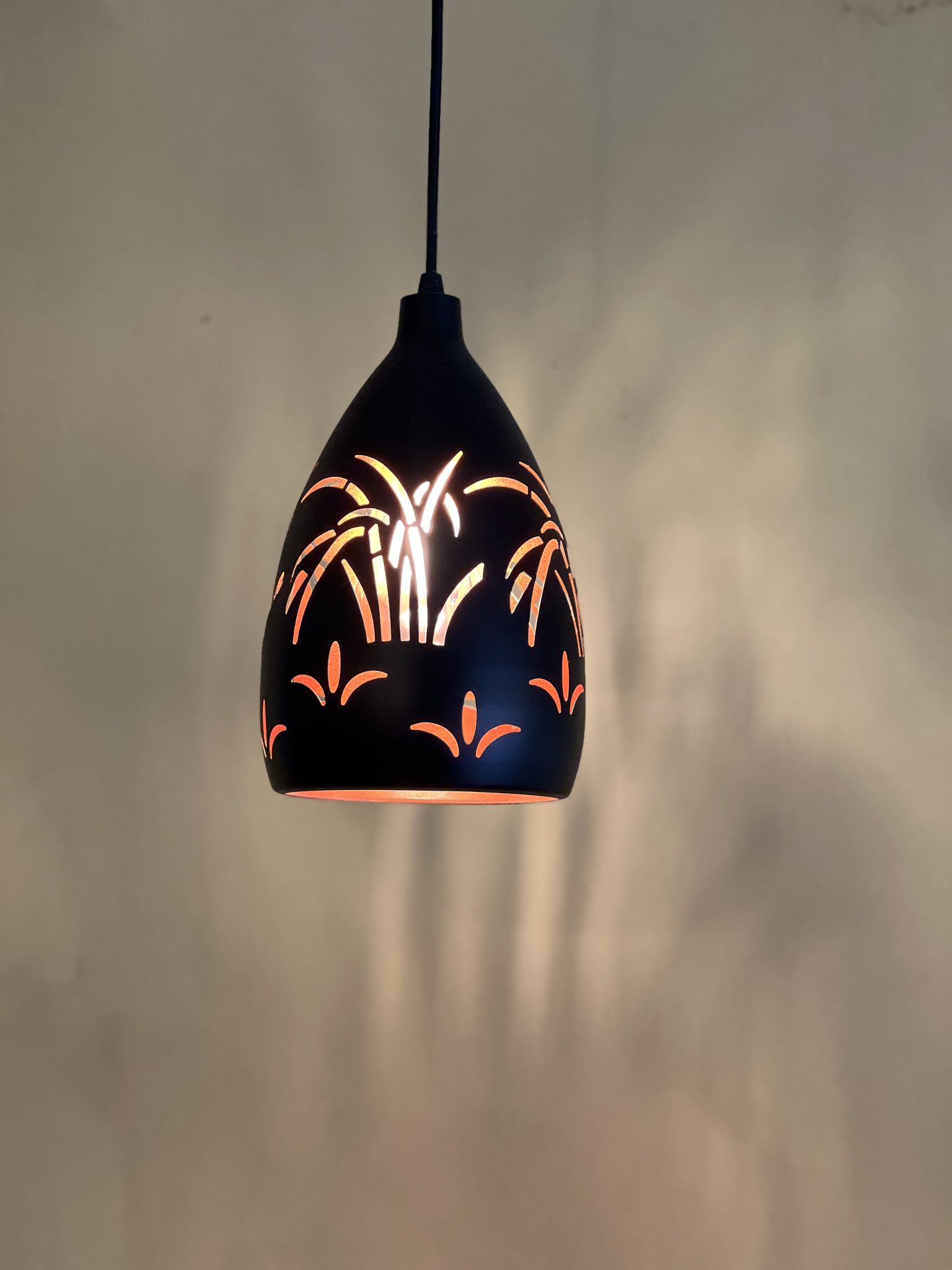
A lamp shade is a traffic controller for light, not a decoration. The shape decides where the glow goes: drums spread it evenly in every direction, empires push it down onto the surface below, bells gather it into a soft pool in between. Pick the wrong shape and a perfectly good lamp reads too dim for books — or washes the whole room when you only wanted a small pool on the nightstand.
What a shade actually does to the light
Every shade has three openings that matter: the top, the sides, and the bottom. Light leaves through all three, and the shape just changes the ratio.
The bottom opening is your working light. A wide bottom rim, especially one low over the bulb, drops a broad pool onto the nightstand, the book, and the glass of water. The top opening sends light up to wash the ceiling, which is ambient light you get for free. The sides are atmosphere — a glowing fabric wall that makes the lamp feel warm from across the room.
Material adjusts all three at once. Fabric absorbs roughly 20 to 40 percent of the bulb’s output before any of it escapes, so a lamp behind a linen shade needs a brighter bulb than the same lamp behind paper or metal. Hard shades barely absorb anything but also barely diffuse: what you get is a bright spot and sharp edges instead of a soft field.
That ratio is why two lamps with identical bulbs can feel like different purchases. Put a 450-lumen bulb behind a translucent drum and you get a room-glowing cylinder — pleasant, unfocused, useless for a print paperback. Move the same bulb under a small empire shade and the nightstand below turns bright enough to read by while the walls stay dim. Same lamp, same bulb, different shape, opposite result. When a lamp disappoints, the shape is usually the culprit before the bulb is.
Drum shades: the even spreader
A drum is a vertical cylinder — top and bottom nearly the same diameter. Because the walls are straight, light escapes in roughly equal amounts up, sideways, and down. That makes a drum the all-rounder: enough downlight for casual reading, enough side glow to soften the room, enough top spill to keep the ceiling from going black.
The trade-off is horizontal glare. When you lie on your side, a drum’s wide glowing wall sits right in your sight line, and the bulb may be visible through a shallow drum. Two things fix it: pick a drum at least 10 inches tall so the bulb hides inside, and put that lamp on a dimmer so the last hour of the evening drops the side glow down to a ember-level shimmer.
Empire shades: the downward director
An empire narrows at the top and flares at the bottom — the classic teardrop silhouette, and the one hanging in the photo at the top of this page. Geometry does the work: the small top opening strangles upward light, the wide bottom rim dumps most of the output down onto the surface below. In practice, an empire lamp lights the nightstand and the lower half of the headboard, and leaves the ceiling dark.
That is exactly what you want for a reading lamp and exactly what you don’t want as the only light in the room. Empires pair well with a small ceiling fixture or a wall wash that handles the ambient layer.
Bell shades: the soft middle ground
The bell curve pulls the bottom rim inward, so the widest point of the shade sits at its waist rather than its mouth. Downlight stays generous but the pool is tighter and rounder than an empire’s, and the curved side wall hides the bulb from low angles better than a straight drum of the same height.
If you keep flip-flopping between “good for reading” and “nice for winding down”, a bell is the compromise that does neither job badly. Its weakness is drama: a bell rarely makes a statement, which is why designers often reach for one in a textured fabric or a colored glass to keep it from disappearing.
Bells also age well in traditional rooms. The curve echoes rounded headboards, turned-wood posts and upholstered furniture in a way that straight drums never do, which is why a bell on a walnut nightstand looks settled while a hard-edge drum on the same table looks borrowed from an office. In modern rooms the logic reverses — keep the bell, take the drum.
A two-line test at the store
Stand back and check two lines. First, the bottom line: the shade’s bottom rim should be wider than the base it sits on — narrower and the lamp looks top-heavy while the light gets squeezed into a stalk. Second, the top line: if you can see straight down into the shade and spot the bulb from across the room, the shade is too shallow for a bedside lamp; you will see that bulb again, glowing in your face, the moment you lie down.
Honestly, most listings never publish the top opening diameter, which is the one number that changes the light the most. If a product page shows only the bottom width and height, assume it is an empire unless the photo clearly says otherwise — and check how many lumens the bulb underneath should deliver to match the shape’s losses. More on proportions, including shade-to-base ratios, lives in our bedside lamp height guide, and the full category is bedside lamps.
One last mechanical note before you order a replacement shade: shapes travel between lamps more easily than you might think, but fittings do not. The standard spider fitting — a washer resting on a harp above the bulb — accepts nearly any drum, empire or bell of the right bottom diameter. Clip-on shades and Uno-threaded shades do not interchange with anything else. If you plan to swap shapes on an existing lamp, confirm the fitting type from the photo of the top of the shade before anything else, because a beautiful empire shade with the wrong fitter is wall art, not lighting.
Frequently asked
- Can I replace a drum shade with an empire shade on the same lamp?
- Usually yes, as long as the fitter size matches (most lamps take a standard spider fitting) and the new shade's bottom diameter covers the bulb. Expect the room to feel dimmer and the nightstand surface below to feel brighter — that is the shape doing its job.
- Does the light coming out of the top opening matter?
- More than people expect. A wide top opening washes the ceiling with soft light and makes a lamp feel airier; a narrow top concentrates everything below. In a small bedroom, a wide top opening can replace some of the ambient light you would otherwise get from a ceiling fixture.
- Which shape is best for reading in bed?
- An empire or bell shape with an opaque fabric or metal body, sitting high enough that the bottom edge is above your sight line when you sit up. A drum works too if it is deep and the bulb sits well inside — the weakness of a drum is horizontal glare, not downlight.