Buying Guides
Kelvin Explained: 2200K to 6500K in Plain Words
If you buy through links on this page we may earn a commission at no extra cost to you.
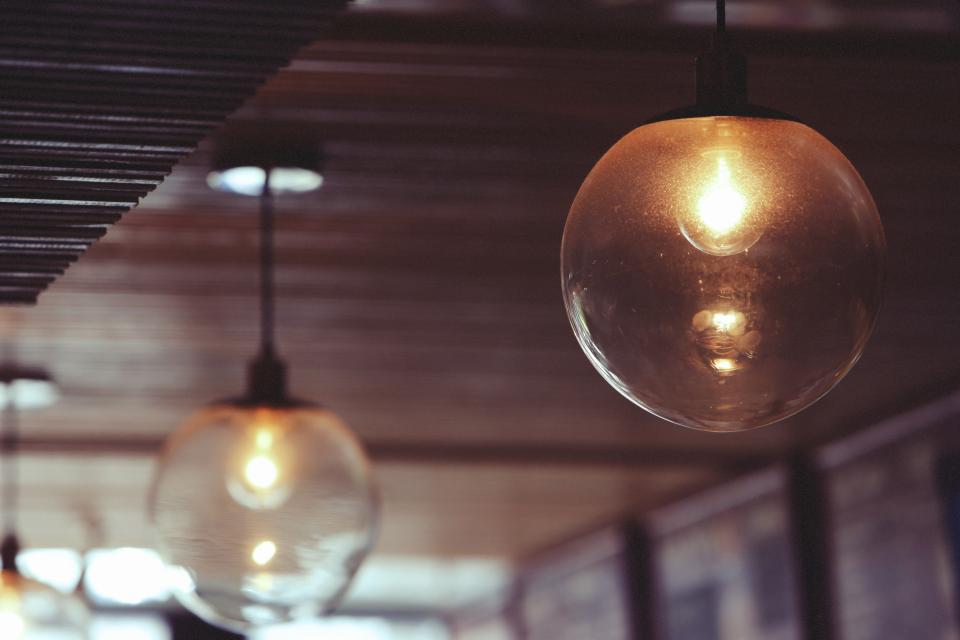
Kelvin is the temperature scale physicists use for a glowing object, and bulb makers borrowed it because fire actually runs on that scale — a candle flame sits near 1900K, which is how “warm” light earned its name. In practice you only need the direction: lower numbers lean red and amber, higher numbers lean blue and white. Everything between 2200K and 6500K is just degrees of that slide from hearth to noon sky.
The whole scale, in plain words
The landmarks below are the ones a bedroom shopper actually meets on a shelf; the degrees between them live mostly in showroom brochures. Skim it once and the numbers on bulb boxes stop being trivia and start being a map.
1900–2200K: flame territory. Candlelight and ember. This range makes rooms feel immediately slower and instantly flatters wood and textiles. Too orange for resolving small print, perfect for the final hour of the evening.
2700K: the incandescent default. The color of the bulbs everyone grew up with. Warm without drifting orange, and the safest choice for any bedroom fixture. If a listing hides the kelvin number, assume 2700K and plan accordingly.
3000K: warm with the amber trimmed. Cleaner and slightly crisper than 2700K; whites and cool grays read truer under it. A good pick for bedrooms painted in grays or blues, or rooms that double as a daytime workspace.
3500K: the awkward middle. Neither cozy nor crisp. It exists for commercial spaces, and a bedroom lit at 3500K feels vaguely like a hotel corridor — nothing you can point to, everything slightly off.
4000K: office lighting. Alert, neutral, faintly clinical at home. Useful at a desk, useful at a mirror in the morning, wrong almost everywhere else in a bedroom.
5000–6500K: daylight range. Noon sun and overcast sky. Photographers and seasonal-light users want it; the rest of us meet it accidentally and wonder why the room feels like a waiting room.
Two numbers between those landmarks rarely appear on bedroom packaging: 2400K, the soft-sunset tier warm-dim bulbs land on, and 5000K, the photography standard that prints “daylight” on the box while looking noticeably bluer than any noon most people have stood under. The gaps between steps are real, too — a room lit at 3000K and the hallway outside it at 2700K look mismatched across a doorway, which is why holding one temperature per room is advice about optics, not just tidiness.
Why 2700K won the bedroom
Heritage did most of the work: a century of incandescent bulbs ran at about 2700K, so every association the word “cozy” carries was trained on that color. Biology finished the job — the blue content that higher temperatures carry is the part that pushes your body clock toward daytime, and 2700K carries very little of it late in the day.
There is also the furniture argument. Wood headboards, linen bedding and warm paint all look richer under 2700K and flatter under 3000K; the room-by-room choice between those two is covered in our 2700K vs 3000K comparison. Above 3000K, both start losing the argument.
A practical reason sits on top of the pleasant ones: 2700K bulbs are the easiest to find, the cheapest per lumen, and stocked in every base and shape a bedroom might need. A standard that is biologically kind, aesthetically forgiving and universally available is not getting displaced soon, whatever the packaging claims.
Where cooler light earns its place
A dressing corner or vanity benefits from 3000K with a high color-rendering score, ideally near a window so daytime judgment stays honest. Dark, north-facing rooms can justify a cooler lamp in the morning hours, when the goal is alertness rather than calm. And anyone using a seasonal light in winter is deliberately inviting 10000K, which is a therapeutic device, not a decor choice. A small desk corner inside the bedroom can even justify a 4000K task lamp on its own switch, as long as it dies at five in the afternoon like a well-behaved office light. The keyword in every case is schedule: cool light is a morning tool wearing an evening disguise.
Two traps to skip
Mixing temperatures side by side. Two bulbs in one fixture — or even one room — that differ by 300K look broken rather than layered. Hold one temperature per fixture at minimum, ideally one per room. The hour-by-hour exception, where the temperature changes on purpose through the evening, is planned out here.
Chasing “full spectrum” marketing. The words are doing a lot of promotional work. In a bedroom after eight in the evening, 6500K is usually the wrong tool wearing a lab coat — what the label claims and what the room needs are different things. Full-spectrum claims also carry a price premium, which means the wrong tool is often the expensive one on the shelf. Check the number printed next to the K, and read the whole panel as shown in our label guide.
Pick by hour, not by hype: 2700K for the default, 2200K or lower for the last stretch, and let the scale do the rest. When two boxes on a shelf disagree, the kelvin figure breaks the tie faster than any adjective on the front.
Frequently asked
- Why do two bulbs both labeled 2700K look different?
- The kelvin number fixes the average color, not the tint: one bulb can lean pink and another lean green while both say 2700K. Better manufacturers hold tint tighter, which is one more thing the lighting label hints at.
- Is 6500K bad for your eyes?
- No damage is involved — at bulb intensities the blue-light eye-harm claim has little evidence. The real cost is timing: 6500K in the evening tells your body clock it is noon, which makes falling asleep harder.
- What is the warmest bulb worth buying?
- For a lamp used only in the last hour or two, 1800K to 2200K is lovely and behaves like candlelight. Below that, orange gets strong enough to make reading and color judgment unreliable.